Free Shipping worldwide on order above $100
Apply for Wholesale

All Categories

Farm to Closet: Luxury Himalayan Cashmere Wool Through Yes Helping Hand

Farm to Closet: Luxury Himalayan Cashmere Wool Through Yes Helping Hand

Yes Helping Hand2025-10-28

The clothes we wear tell stories. Some are made in factories where machines run day and night. But other clothes carry different stories, stories that start in the mountains, pass through the hands of skilled artisans, and arrive at you with purpose woven into every fiber.

This is how wool travels from the high Himalayas farms to your closet through Yes Helping Hand.

Where It Begins: The Himalayan mountains of Nepal

This is where the story of Yes Helping Hand begins. In the remote, rugged areas of Upper Mustang and Dolpa, at heights above 3,800 meters, these mountain communities are where our fiber journey begins. Here, a mountain goat called Chyangra lives among cold winds and dramatic mountain views. These areas are along Nepal’s border with Tibet, where the air is thin, the weather is harsh, and nature produces something truly special.

To survive winters when temperatures drop far below freezing, they grow two layers of coat. The outer layer is thick and rough, protecting them from cold wind and rain. The inner layer, hidden underneath, is very soft and fine, this is the precious fiber that becomes the cashmere and pashmina we treasure.

These goats are our source, the start of every product we make. They graze on high mountain pastures where only hardy plants grow. These mountainous communities rely on these animals for survival. 

When we say “farm to closet,” we mean it truly starts here, in these mountains. Yes Helping Hand works directly with these herders, making sure that the journey from this Himalayan farm to your home is fair, ethical, and sustainable every step of the way.

Collecting the Wool: Once a Year, With Care

Wool collection happens once annually, during the transition from winter to spring. This timing is natural. As the weather warms, Chyangra goats naturally shed their soft undercoat. Herders gently comb or gather this fiber, a process that does not harm the animals.

The process harms no animal. Each Chyangra produces only a limited quantity of usable per year. This scarcity is one reason cashmere remains precious. But because we work directly with the herders, without middlemen, that makes our cashmere products remain high-quality and affordable. We are ensuring fair compensation reaches the people who care for these animals year-round. This direct relationship means herders receive proper value for their work instead of selling to middlemen at reduced prices.

Preparing the Wool: Cleaning and Carding

Freshly collected wool comes with natural oils and bits of dirt from the mountains. It needs careful cleaning before it can become yarn.

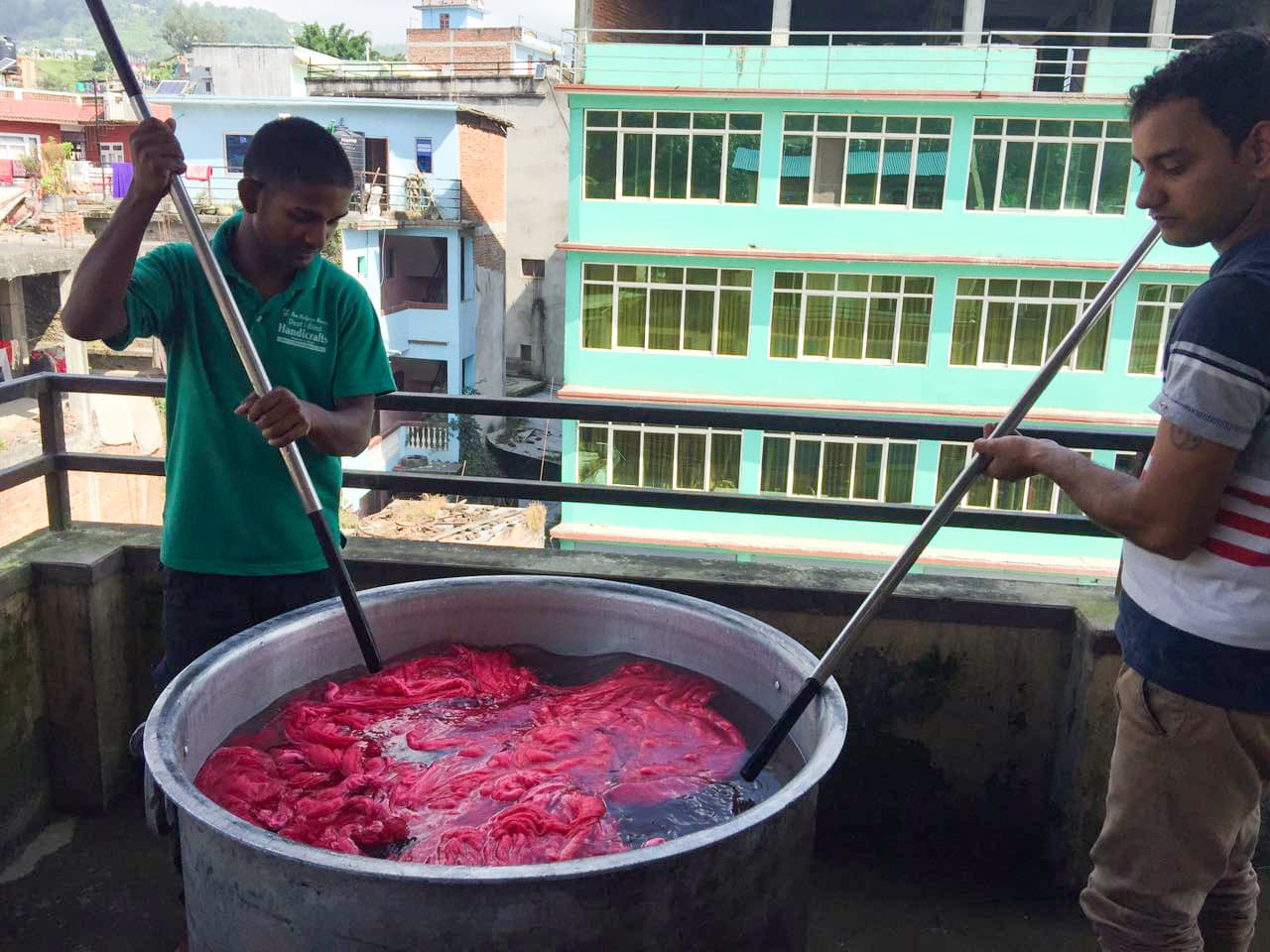
The wool goes into warm water baths mixed with gentle, natural soaps. Workers in the local communities wash it carefully, gently shaking the water enough to release dirt but not so roughly that fibers get damaged or tangled. Multiple rinses follow until the water runs clear.

After washing, the wool looks lighter in color and feels softer. Once dried, the wool still looks disorganized, fibers go in all directions, tangled and uneven. This is where carding happens. Workers pass the wool through using hand carders, which are flat paddles covered in fine wire teeth. As the wool moves between these surfaces, the teeth gently pull fibers into alignment. Tangled clumps separate. Any remaining vegetable matter falls away. The result is a web of wool where all fibers run parallel.

After the wool is collected, cleaned, and carded in the mountain communities, we bring it to our Yes Helping Hand workshop in Pokhara.

Spinning: Twist Becomes Strength

At Yes Helping Hand, this step happens by hand, performed by the people at the heart of our mission: physically challenged individuals, single mothers, and members of marginalized communities.

Using traditional spinning wheels, artisans draw out small amounts of fiber from the roving while the wheel turns. This twisting motion locks the fibers together. The amount of twist determines the yarn's characteristics; more twist creates stronger, firmer yarn; less twist keeps it soft and lofty.

Hand spinning creates yarn with subtle variations in thickness that give handmade fabrics their distinctive character. Each spinner develops their own rhythm and tension, leaving an individual signature in their work. This is skilled labor that requires training, focus, and time. Yes Helping Hand provides this training, teaching people who face barriers to employment the craft of turning fiber into yarn.

Creating Fabric: Two Different Paths

Now comes the transformation from yarn to fabric. This happens through either weaving or knitting, depending on what product is being made.

Weaving

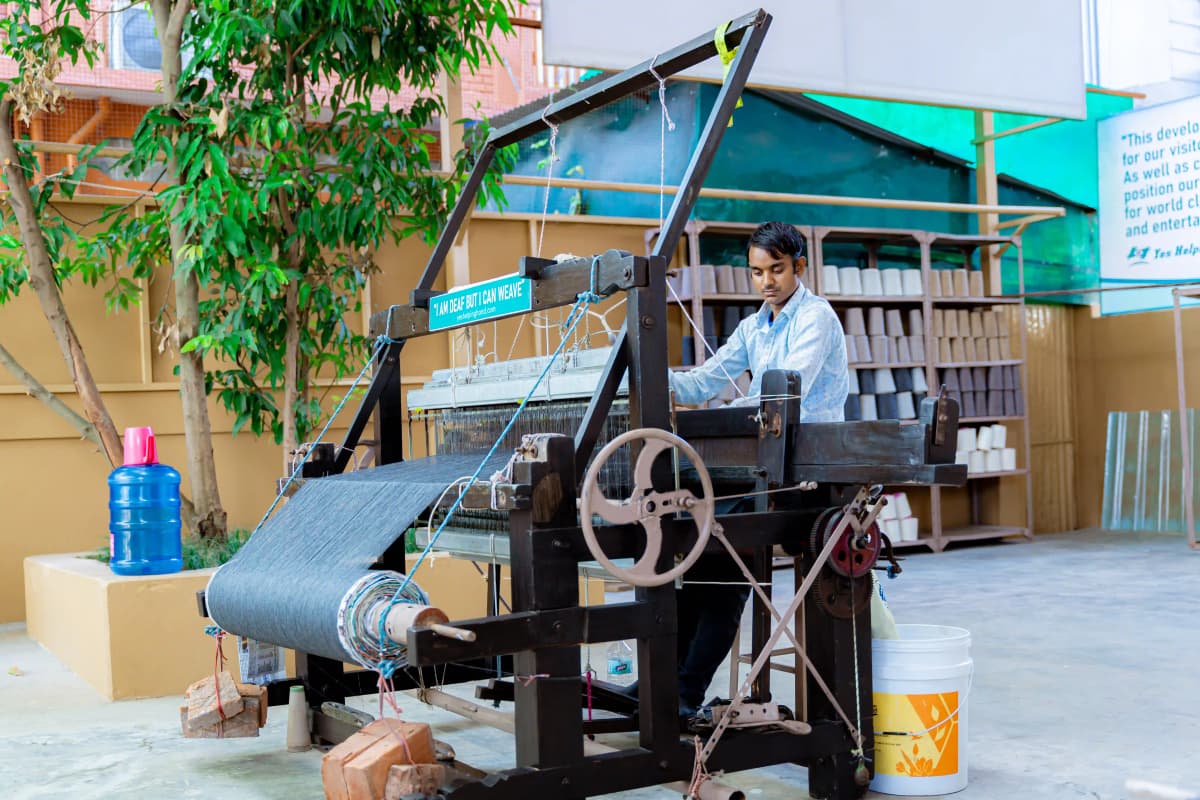
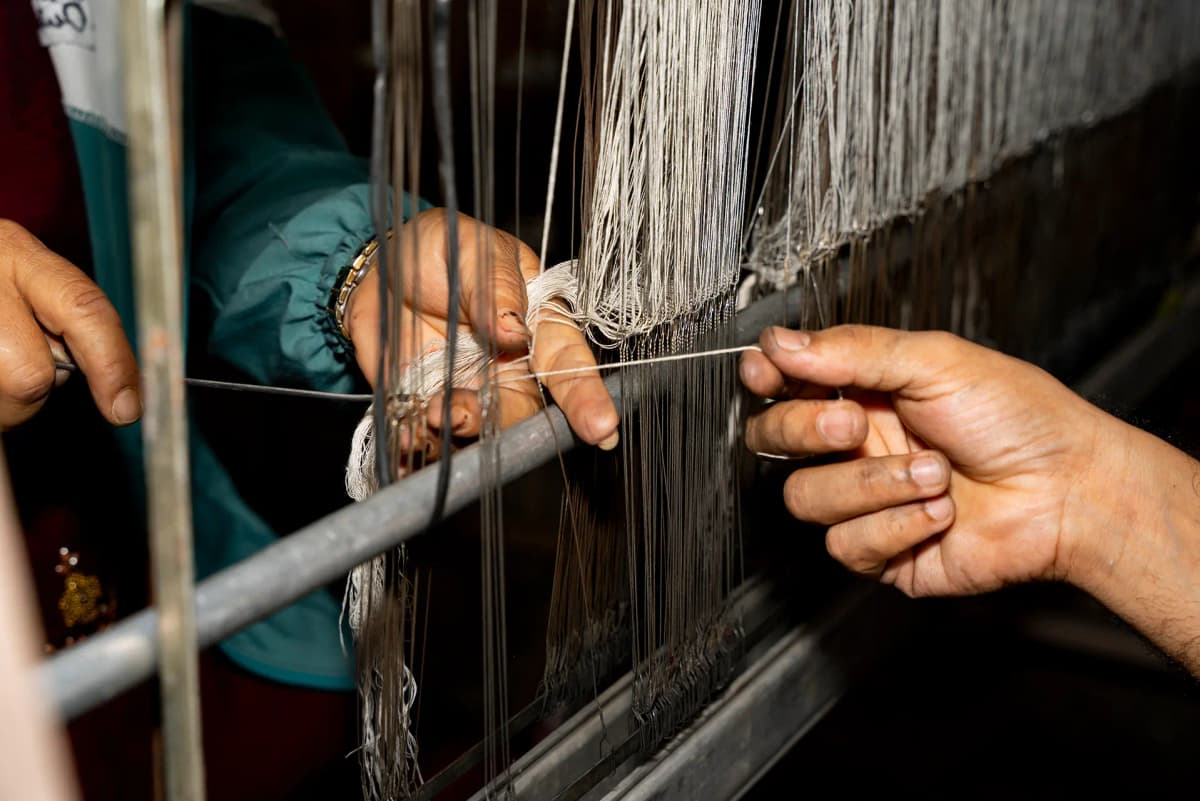
For woven items like shawls, scarves, and some blankets, yarn goes onto a loom. The loom is a frame that holds one set of threads (the warp) stretched tight and parallel. These warp threads run the length of the fabric.

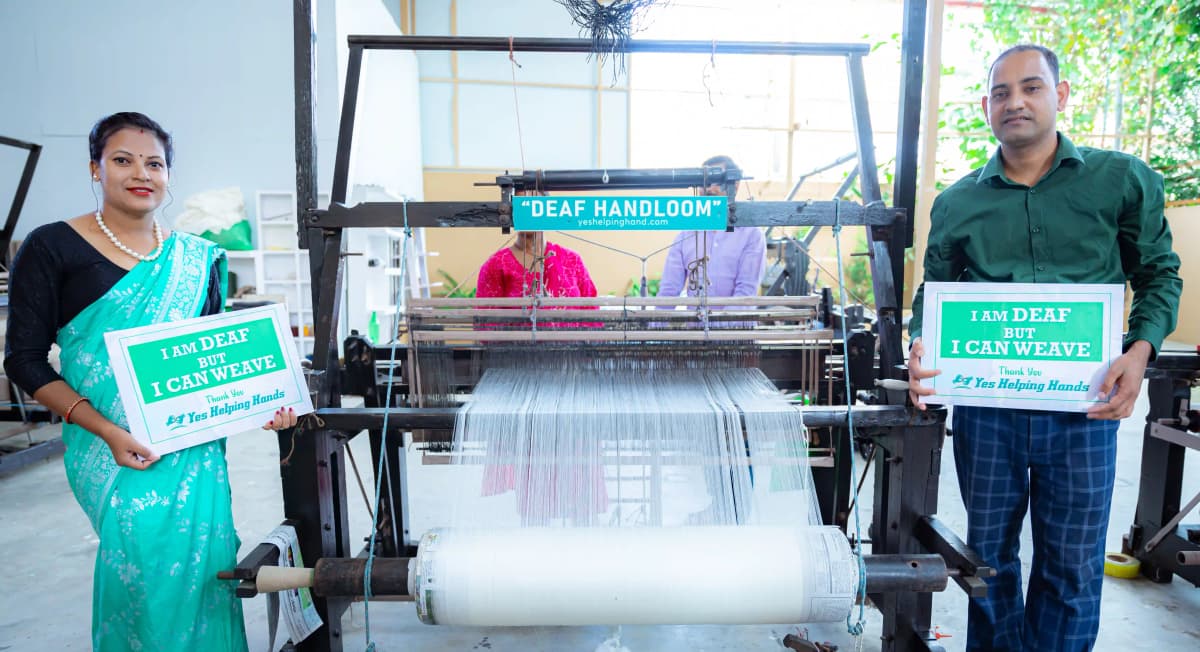
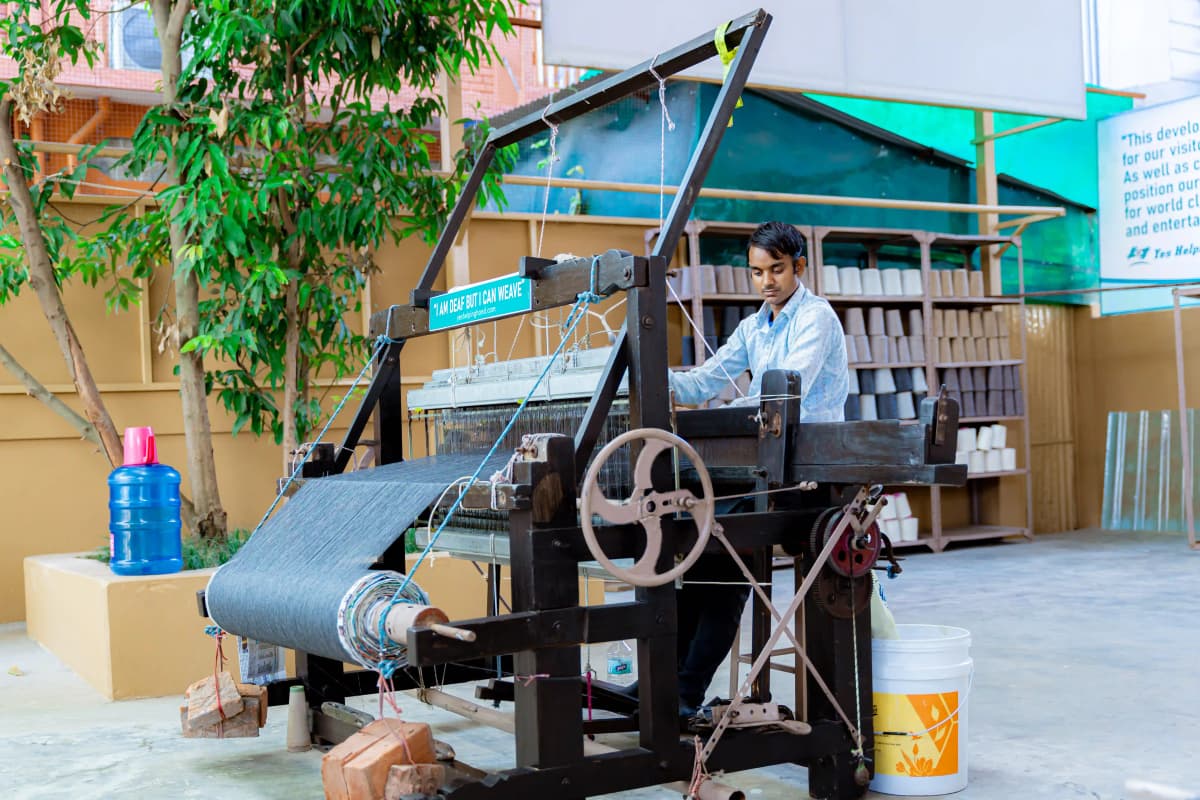
We use traditional handlooms that require the weaver to operate multiple parts: foot pedals that lift different sets of warp threads, a shuttle that carries the weft thread across, and a beater that packs each new row firmly against the last. This coordination takes skill and creates fabrics with subtle irregularities that machines cannot replicate.

Knitting

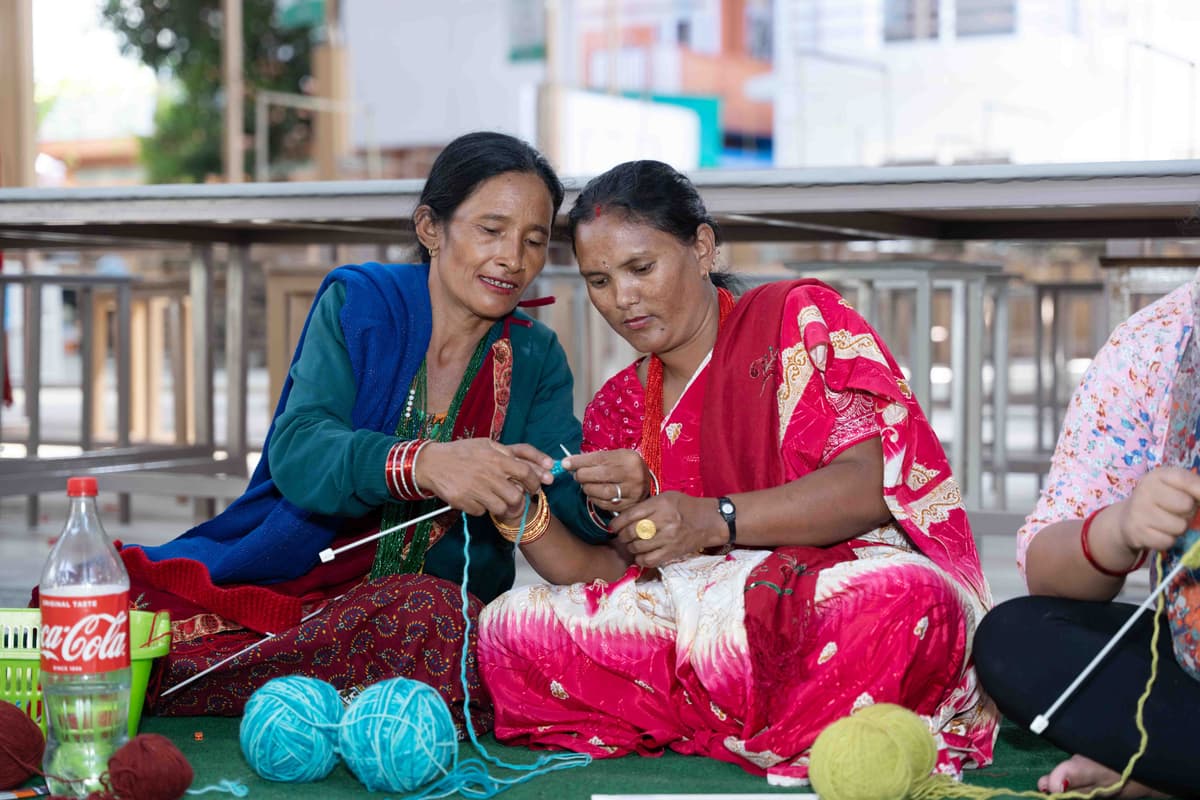
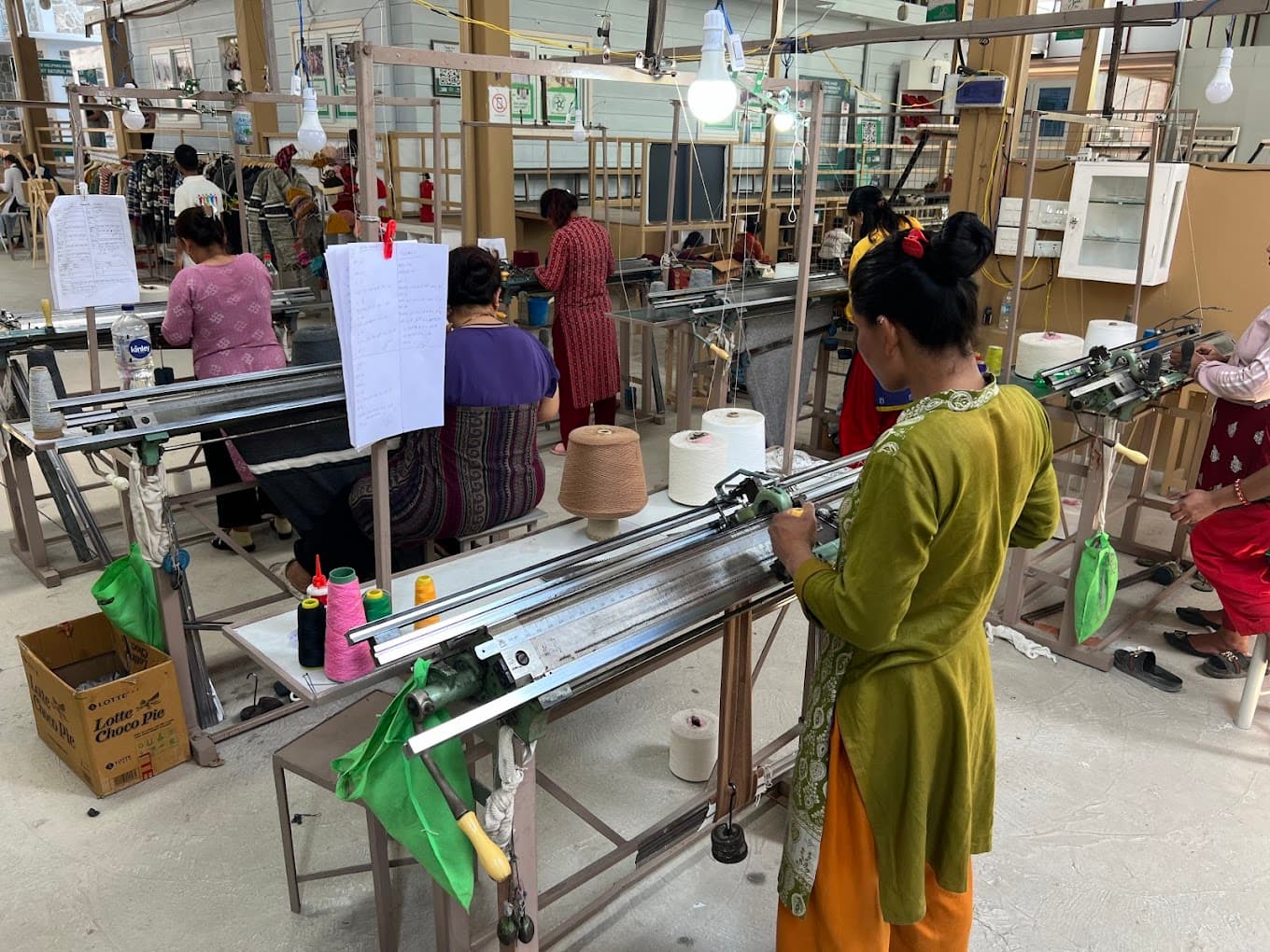
For products like sweaters, hats, gloves, and socks, knitting is the method. Knitting uses needles to create interlocking loops of yarn. Each new loop pulls through the previous one, building rows that form stretchy, flexible fabric. 

Knitted fabrics have natural stretch, making them comfortable for clothing worn close to the body.

Finishing Touches: Quality Before It Reaches You

Before any product leaves the workshop, it goes through final steps to ensure quality.

Inspection and Mending

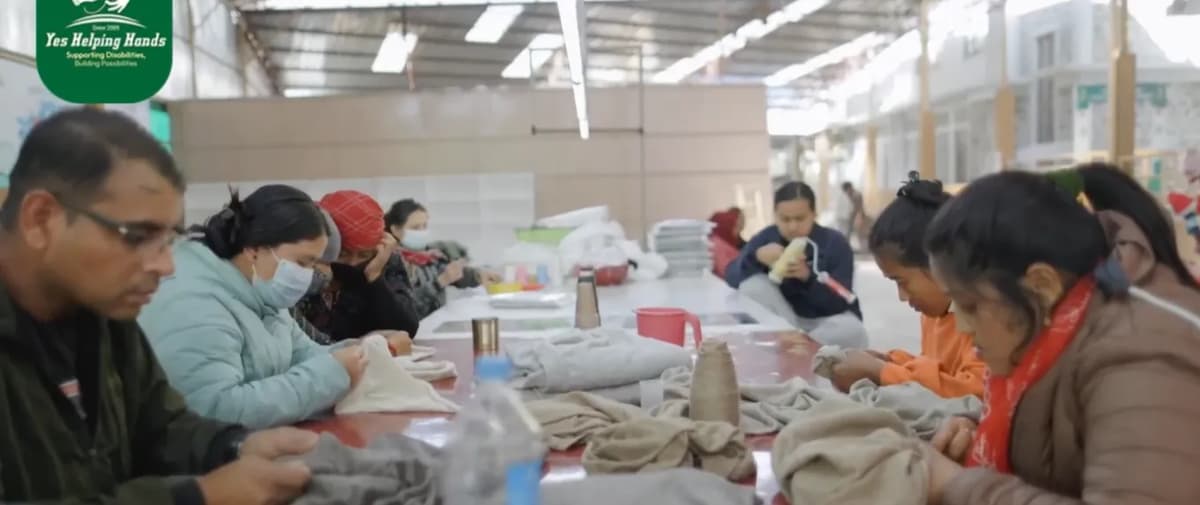
Workers examine every garment carefully, checking seams, looking for loose threads, and testing buttons or closures. If any small flaw is found, it is repaired immediately. Nothing is packed and sent out until it meets quality standards.

Pressing and Shaping

Garments are pressed with heat and steam to remove wrinkles and give them proper shape. Collars are pressed flat, seams are opened and flattened, and hems are crisped. This pressing makes the garment look polished and professional.

Embroidery (For Special Pieces)

Some products receive hand-embroidered details, traditional patterns, decorative borders, or artistic motifs. This embroidery is done by skilled needleworkers who follow traditional Nepalese designs or create contemporary patterns. These embellished pieces become one-of-a-kind items, carrying extra hours of handwork.

The Products: What This Process Creates

This farm-to-closet journey produces a range of Cashmere items, all following the same careful process:

  • Cashmere Shawls and scarves 
  • Cashmere sweaters, cardigans, and pullovers 
  • Cashmere Jackets and outerwear
  • Wool Hats, gloves, and socks
  • Cashmere Blankets and throws

What You're Actually Wearing

When choosing cashmere from Yes Helping Hand, you're wearing:

  • Wool from Chyangra goats living at 3,800 m above sea level.
  • Fiber that was carefully collected without harming animals.
  • Yarn that was hand-spun by trained artisans.
  • Fabric that was woven or knitted with skill and attention.
  • A garment that was sewn, inspected, and finished by people who take pride in their work.
  • Support for specially-abled individuals, single mothers, and marginal communities.
  • The result of fair wages paid to herders, spinners, weavers, and sewers.
  • A product made with natural, sustainable materials and process.

This is the farm-to-closet connection. Not just knowing where something came from, but understanding the journey it took and the people who made that journey possible. When you wear Yes Helping Hand, you wear that entire story.

How does Yes Helping Hand empower the Community?

How does Yes Helping Hand empower the Community?

Yes Helping Hand2024-10-22

At Yes helping hand, We believe in Empowerment through Employment in Nepal.  Founded in 2011 in Pokhara, Nepal, our mission is clear: to empower specially-abled individuals, marginalized groups, and single mothers by providing free training, employment, and a chance to reclaim their independence. 

Empowerment Through Employment

One of the main ways, Yes Helping Hand empowers the community is by providing fair employment opportunities. Many of our workers face physical disabilities or socioeconomic hardships, which limit their access to traditional job markets, by offering hands-on training in traditional Nepali handicrafts like Cashmere Weaving, Dhaka weaving, hand knitting, and carpet knotting. Yes Helping Hand opens doors to sustainable employment,  allowing workers to earn a fair wage and support their families.

Skill Development and Training

Yes Helping Hand provides more than just jobs, we offer skill development training programs. Our artisans undergo extensive training in their chosen craft, with a particular focus on producing luxurious, ethically sourced cashmere, Pashmina, Himalayan wool, Silk, and natural cotton products. This hands-on approach not only builds technical skills but also implants a sense of pride and ownership in the work. The Each One Teach One training program in Nepal further extends this impact, as experienced artisans train recruits, ensuring that knowledge is passed down and that every participant has the tools to succeed.

Learn skill development training.

Supporting Single Mothers

Balancing childcare while earning a living is often an overwhelming challenge. For single mothers, Yes Helping Hand is more than a workplace, it’s a lifeline. By offering flexible work schedules and the opportunity to work from home, Yes Helping Hand supports mothers to provide for their children while remaining actively involved in their upbringing. The income they generate helps support their families’ education and healthcare needs, offering a brighter future for their children.

Promoting Ethical and Sustainable Practices 

We are deeply committed to ethical sourcing and sustainability. Our products are made from natural animal cruelty-free, responsibly harvested materials. We believe in Impact Beyond Fashion and that fashion should not only look good but also do good for both people and the environment. By supporting fair trade, eco-friendly, and animal cruelty free production practices, we ensure that every product tells a story of resilience, craftsmanship, and social responsibility.

Building a Community of Inclusion

We are not just a business; we are a community. By fostering an environment of inclusivity and support, we create a sense of belonging for our workers. At Yes Helping Hands, differently-abled individuals are not seen as less capable but rather as skilled artisans whose abilities shine through in their work. We celebrate diversity and ensure that everyone, regardless of their background or ability, has a chance to thrive and empower the community.

Explore the collections of cashmere crafted by the skilled artisans at Yes Helping Hand.

Conclusion

Yes Helping Hand empowers by employment programs in communities to transform lives. Through fair employment, skill development, support for single mothers, and a commitment to ethical practices, we offer more than just jobs, we offer hope, dignity, and a sustainable future. When you purchase a Yes Helping Hand Cashmere product, you’re not just buying a piece of clothing; you’re contributing to the empowerment of individuals who are crafting their own stories of resilience and success.

Join us in our mission to empower the community of physically challenged, marginalized groups, and single mothers and promote sustainable craftsmanship by exploring our products and sharing the stories of the artisans behind them.

Handmade vs Machine-Made Cashmere & Woolen Clothing

Handmade vs Machine-Made Cashmere & Woolen Clothing

Yes Helping Hand2024-10-22

Handmade and machine-made products differ a lot in the world of fashion today. They have had a big impact on ethical issues, originality, and quality. We can easily differentiate between machine-made and handmade wool and cashmere products. Even though manufactured goods are widely available these days, handmade goods have a timeless appeal that relates a deeper tale, and encourage sustainable fashion.

→ Quick Differences between Handmade and Machine-made Clothing:

AspectHandmadeMachine-made
QualityMade by Hand for superior comfort & longevityOften uses mixed or inferior fibers, less durable
Environmental ImpactSustainable techniques, natural dyes, minimal wasteChemical treatments, higher waste production
UniquenessEach piece is one-of-a-kind with artisan personal touchMass-produced, identical standardized products
Cultural ValuePreserves traditional skills and supports artisansFactory-based with no cultural preservation
Personal ConnectionProduct tells the story of its makers , carries dreamsNo personal story, purely transactional
Economic ImpactSupports marginalized workers through fair trade practicesCorporate profit focus with limited worker benefits
Fashion PhilosophySustainable fashion, quality over quantity, meaningful purchasesFast fashion approach, disposable mentality

Explore our collection of handwoven, handloom, and handmade cashmere and woolen clothing, crafted with care by skilled Nepali artisans.

Better Quality

Handmade pashmina and wool goods are meticulously produced with cruelty-free, ethically sourced fibers. 

Some proud moments like, “I still treasure a wool jumper that I received from a friend who visited Pokhara and returned with goods produced by artisans employed at Yes Helping Hand.” 

Over time, the handmade cashmere products offer users more value. Machine-made textiles, on the other hand, could employ mixed or inferior fibers. It lacks the coziness and longevity of handmade items. They are not as long-lasting or as comfortable as we would want.

Accountability for the Environment

Sustainable techniques are a top priority for many craftspeople who make handcrafted wool and cashmere products. They support regional ecosystems, reduce trash, and employ natural dyes. 

Another testimonial reads, “I went for the Yes Helping Hands, Each One Teach One program, where I learned the process of making a handmade scarf. I was astounded by the artisan's use of native flora to make natural dyes. Wearing something that was both elegant and environmentally friendly made me feel pleased”. 

Buying handmade clothing supports the environmentally friendly and sustainable fashion sector. Additionally, you can add a lovely item to your closet. Machine-made textiles often come from companies with lower environmental standards, which results in increased waste.

Individuality and Distinctiveness

Wool and pashmina items manufactured by machines are frequently mass-produced in factories. They lack the uniqueness of handmade products that last for a long time. 

The Cashmere shawl from experienced artisans not only carries the best quality of cashmere wool, also carries their warmth, supporting sustainable fashion even more.

A handmade shawl from Yes Helping Hands is more than clothing. It tells the story of skilled artisans. Their heritage is woven into every thread. You wear purpose, not just fabric. This supports sustainable fashion and carries the dreams of its makers.

Beyond the Item

Purchasing handmade cashmere or pashmina clothing means investing in a bit of community, culture, and history in addition to a piece of clothing. 

Visitors often tell us, “I frequently imagine the artists who created the things I own, picturing their laborious labors producing something exquisite”. 

By doing so, you are lending your support to those whose lives have been devoted to maintaining traditional skills and adding to the tradition of human expression.

In summary

Handmade pashmina and wool products provide a distinctive and significant experience in the world of fashion. Selecting handmade products not only helps marginalized workers and the preservation of traditional crafts, but it also enables you to invest in a high-quality, sustainable product. So keep the handmade advantage in mind the next time you're searching for a unique present or an opulent addition to your wardrobe. Select an item that honors the artistry that enhances our lives, tells a story, or links you to a community. A few are available at yeshelpinghand.com.

Empowering Lives Through Skill Development: Yes Helping Hands' Journey

Empowering Lives Through Skill Development: Yes Helping Hands' Journey

Dinesh Kumar Thapa2024-09-23

At Yes Helping Hand, we strongly believe that skills can change lives. Particularly when who need the opportunity the most. Through imparting useful skills like as knitting, spinning, weaving, sewing, and painting, we enable marginalized populations, single mothers, and people with disabilities to become financially independent and to create better futures.

Our Goal: Skills development for better life

Yes Helping Hand was established on the belief that everyone ought to have the chance to grow, learn, and earn. Irrespective of upbringing, life events or level of physical ability, they should be able to life respectful life. By offering instruction in both ancient and contemporary crafts, we hope to enhance communities by empowering people to discover their own hidden abilities and develop them into reliable sources of income.

Who We Support

Single Mothers: Single mothers who have experienced hardships are frequently struggling to make ends meet. This could be a result of spouse loss or other life challenges. They are trained to gain the knowledge and job to achieve financial independence.

Marginalized Communities: Opportunities for skill development are scarce for many people from disadvantaged backgrounds. We establish a friendly environment where people can develop and make significant contributions to society.

Individuals with Disabilities: We think that a person's physical disabilities should never stand in the way of their accomplishment. We assist people with disabilities in developing skills that not only empower them but also allow them to show off their amazing talents by providing training customized to meet their needs.

Our Teachings: Building a Better Future

Our training courses provide hands-on learning opportunities and direction. They are taught a variety of traditional and artistic skills such as:

  • Weaving: Our trainees are provided with 3 months training along with basic allowance. Once they  acquire the skill of weaving, they get job opportunities, where they get paid on the basis of the number of products they make. They get the expertise required to create superior woven goods, starting with basic patterns and progressing to more complex designs, ultimately making great designs.
  • Mending: Through upcycling and mending clothes, we can cut waste and contribute to sustainable fashion. These skills are taught in depth within 3 months.
  • Spinning: People can give their products unique touch by learning to spin their own yarn and making their own fabrics and threads.
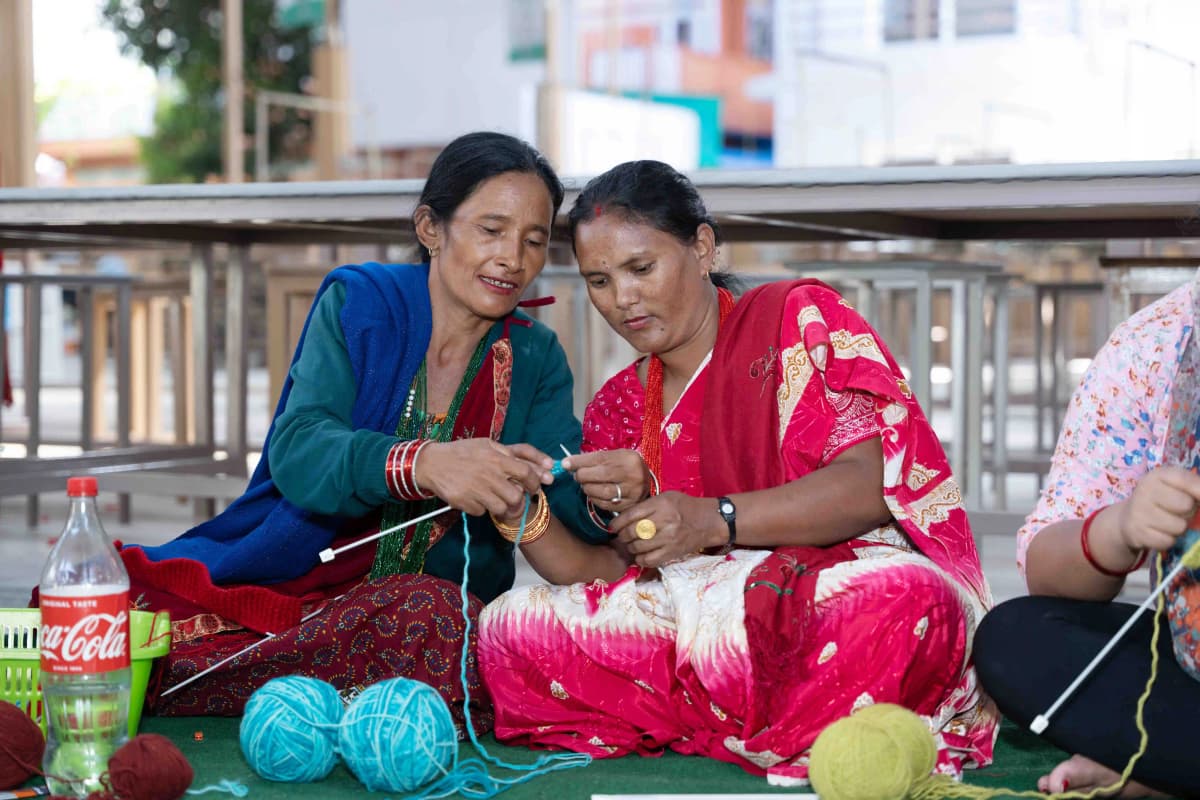
  • Knitting: Those who knit can create everything they long for. This skill gives our makers a sense of pride and achievement, as well as income.
  • Painting: Through self-expression and creativity, our painting classes enable participants to make great art. These are later sold giving them an opportunity to earn.

Learn and Earn

Yes Helping Hand offers more than just instruction. We establish a whole ecosystem in which users can produce, learn, and make money:

  • High-quality instruction: Our knowledgeable instructors support participants at every turn, making sure they gain confidence in their ability to do each task.
  • Product Development: We train makers in design, quality assurance, and branding. They make  market-ready, high-quality products by end of 3 months.
  • Market Access: We provide participants with a platform to sell their works by connecting them with local and international markets once their items are ready. As a result, they are able to improve their standard of living by earning.

Success Stories:

Our path has been replete with heartwarming tales of bravery, resiliency, and transformation. Durga Sharma addressed life's obstacles head-on, raising her two children alone for four years despite only having completed her 10th-grade education. She has now completely changed her life as the Maker of Yes Helping Hand. She has become a confident and independent weaver who can now confidently support her family. Rita Pokharel, who was born with physical disabilities, surmounted life's hardships with fortitude and discovered freedom and purpose via Yes Helping Hands, where she now proudly provides for her family.

Behind every handcrafted product is a story of empowerment, resilience, and hope. Read our more maker stories who are building better futures for themselves and their families  

Why Our Method Is Effective

Holistic Training: To ensure that our makers are prepared for success, we offer a market-ready learning experience.

Inclusive atmosphere: We are accessible and friendly at our training facilities, which creates a sense of belonging. Each maker is respected and assisted.

Sustainable Impact: We create sustainable livelihoods for the makers such that they can earn with the skills they have.

Fair Compensation: Our makers are paid according to their work output, ensuring that dedication and skill directly translate into fair earnings. This performance-based payment system motivates continuous improvement while providing financial security based on individual contribution.

Ways in Which You Can Encourage Yes Providing Assistance

We couldn't do our work without the kind people and organizations that support us. Here are some ways you can support our mission

Invest in Handmade Goods: You can directly assist our members on their path to financial independence by purchasing goods manufactured by them.

Training program: You can join our exclusive " Each One Teach One" workshop, where you will have the opportunity to learn from and support these artists.

Forward-Looking: Establishing a Community of Innovators

Not only do we teach skills at Yes Helping Hand, but we also cultivate a community of capable, self-assured changemakers who are eager to make a difference. Our efforts to empower single mother, underprivileged groups, and people with different abilities have a beneficial impact that spreads far beyond our training facilities in home.

Come along on this empowerment and skill-building adventure with us. We can build a future where everyone has the opportunity to learn and earn, by working together to create opportunities and improve communities.

History Of YHH
About us
Yes Helping Hand2024-09-23

Yes Helping Hand: Support, Empowerment, and Employment

Amongst the majestic Himalayas, dreams and hopes, through the tides and waves of life, an initiative for empowerment and encouragement was born.

The initiative and vision for support, empowerment, and employment. Yes Helping Hand (YHH) is more than just a non-profit organization in Nepal; it is a movement of willingness to help others, empathetically and compassionately. We believe in the inherent potential of every individual, irrespective of their background or abilities, and work towards community empowerment, offering free-of-cost job training programs to equip specially abled individuals, women, and marginalized communities with relevant skills for employment. Coming from a long journey to this current day, Yes Helping Hand’s main motto has always been to support, train, and employ every individual of Nepal. 

Following in the footsteps, Yes Helping Hand has always been working toward supporting and empowering society, women, especially the disabled and marginalized people of Nepal, who always hold a special place in our hearts. It is we, our morals, and culture that make this world a better place to live in.

At Yes Helping Hand, we are not just weaving threads; we are weaving together a knot of change by making animal cruelty-free products that are sustainable and environmentally friendly, empowering and supporting both people and the planet.

The journey of empowerment and sustainability for Yes Helping Hand began in September 2014, rooted in a heart-wrenching incident that forever changed its founder, Mr. Dinesh Kumar Thapa. A social entrepreneur with humble beginnings, Dinesh grew up in the shadow of the majestic Himalayas, immersed in rich cultural traditions that instilled in him a deep sense of compassion and kindness.

Moving from the vibrant capital of Kathmandu to the serene town of Pokhara, Dinesh Kumar Thapa faced countless struggles. He understood firsthand the pain of being marginalized and the relentless fight for a better life for oneself and one’s family. His resolve deepened when he witnessed a tragic event: a young boy, unable to speak or hear, was mercilessly bullied and beaten by his peers. The anguish of this child, driven to suicide by the cruelty of discrimination, shook Dinesh to his core.

This heartbreaking incident ignited a fierce commitment within him to confront the injustices surrounding him. He could no longer stand by while lives were lost to intolerance and cruelty. With a clear vision in mind, Dinesh dedicated himself to empowering every person in his community. He envisioned a world where everyone, regardless of their abilities, traditions, or backgrounds, could thrive in equality.

Through training and support, he aimed to cultivate independence among individuals, dismantling the barriers that perpetuated discrimination. Thus, Yes Helping Hand was born—a beacon of hope striving to create a more compassionate and equitable society for all.

Yes Helping Hand’s objective is to drive meaningful change by utilizing a portion of our profits to foster education for kids and individuals, empowering through self-sufficiency, providing value for hard work, and also contributing to community development through donations and impactful initiatives.

Wholehearted support from the local community and people around the world. What once started with two trainees starting their journey in the garment manufacturing industry crafting pashmina, wool, and natural fiber handicraft products, today Yes Helping Hand has trained and employed over 180 employees that have brought lasting change in the lives of women, disabled people and marginalized people.

At Yes Helping Hand, our commitment extends beyond supporting our community; we also recognize our responsibility to the planet. In an era dominated by fast fashion and unethical garment manufacturing, we chose a different path—one rooted in sustainability and ethical practices.

We source exquisite Himalayan Cashmere and Pashima, natural wool, and other eco-friendly fibers from within Nepal. Our collections include unique, timeless pashmina scarves, sweaters for all genders, natural wool jackets, and handcrafted clothing and accessories. Each piece reflects the rich culture and traditions of Nepal, telling the stories of the artisans who pour their heart and soul into their craft.

By embracing this sustainable approach to fashion, we aim to create a positive impact that goes far beyond clothing. We believe in fashion that honors both people and the planet, crafting products that are as meaningful as they are beautiful.

Learn how woolen and cashmere products are made at Yes Helping Hand.

Operators of Yes Helping Hand
About us
Yes Helping Hand2024-09-23

Empowering women and marginalized groups of Nepal has always been the motto of Yes Helping Hand. For the past decade, we have been actively working to provide employment opportunities to uplift every individual in the community. Yes Helping Hand is a partnership of both people and organizations to break down barriers and create sustainable change around the world.

The Partnership for Social Empowerment

The complications women face in Nepal are relatively high, especially for Single and differently-abled women and mothers who face problems regarding discrimination, social stigma, and stereotypes that hinder their personal development as well as professional development. Research shows that in Nepal only 26.3% of women are employed actively whereas many find themselves trapped in informal employment sectors with little opportunity for career growth and development.

At Yes Helping Hand we work hand in hand to change the current situation of women in employment and empowerment sectors. We believe the relationship between the organization and women is correlated and dependent upon each other for the shared mission of community empowerment and providing platform and opportunities together, they confront pressing societal challenges, from poverty to gender discrimination, creating a ripple effect of positive change.

Yes Helping Hand doesn’t simply offer aid; it fosters an environment where collaboration thrives. Those who work at Yes Helping Hand aren’t just employees; they are essential partners in a transformative movement, weaving their stories and strengths into every facet of the organization.

How is Yes Helping Hand the product of Individuals?

Yes helping hand is a product of individuals who were once sidelined by unemployment and societal exclusions who worked hard to foster leadership, enabling individuals to assume control in sectors from manufacturing to Information technology. The artisans, along with the leaders of Yes Helping Hand, are now an integral part of our organization's success and have evolved into artisans and leaders, driving innovation and sustainability.

Learn more about Makers with their Story.

Artisans and their Effort:

From spinning delicate Himalayan cashmere fibers to wrapping threads on handlooms to drafting precise patterns and art on the handicraft, the skill and patience of the artisans, and dedication towards the empowerment of the individual and society.

This production process is about more than just creating beautiful items; it’s about preserving traditional craftsmanship while carving out pathways for empowerment.

Explaining and Helping Customers Choose Cashmere:

Along with artisans and leaders, the helpers help customers choose the cashmere, explain them, and help them with their needs. These individuals also have a crucial role in the sales and marketing of the organization. They help people know about the artisans and people behind every product, which not only builds emotional connections with the customer but also raises awareness of the challenges faced by the women, disabled, and marginalized people of our community, and brings people around the world closer to standing for a change.

Movement to create difference-Yes Helping Hand

The mission that started with two trainees has grown into 180 employment opportunities created giving a voice to the voiceless, standing firm and steady for the needy and marginalized people, especially single mothers and specially abled individuals of Nepal.

According to the World Bank, women's labor and empowerment participation is significantly low in Nepal, and social enterprises like Yes Helping Hand actively work to close the gender gap by providing skillful job training and a supportive environment. Yes Helping Hand equips individuals with the tools they need to succeed, increasing their participation in the national workforce.

Empowerment Beyond Employment

Empowerment is a term that goes beyond receiving a paycheck; it is about helping and uplifting people of our community to develop valuable skills, confidence, and making them part of the community that values their contribution.

Due to the unwavering support and love from the local to international level, Yes Helping Hands has grown to become a place for many artisans of Nepal for their first taste of formal employment, where they can learn and grow for a brighter future for their family

For many, Yes Helping Hand represents their first taste of formal employment. It has become a place where people can learn and explore the opportunities with new skills withing the organization, rising to leadership roles contributing to Nepal's broader economic aspect.

Sustainability as a Sustainable Fashion Brand

Yes Helping Hand is also committed to sustainability. In a world increasingly plagued by fast fashion and environmental degradation, the organization, along with its artisans, makes conscious choices to produce ethically-sourced, eco-friendly products.

Learn More about Fast Fashion vs Sustainable Fashion

By utilizing Himalayan cashmere, natural wool, and hemp, Yes Helping Hands minimizes its environmental footprint while supporting local industries.

This commitment to sustainability is deeply embedded in the leadership ethics of the organization. We understand that creating a sustainable future with environmental considerations involves building a legacy for generations to come.

Hence, the eco-friendly products crafted here are based on the vision of a more just than just world, a sustainable world.

Impact on the Community

The positive influence of Yes Helping Hand extends well beyond its immediate workforce. By uplifting marginalized individuals, particularly single mothers and specially-abled individuals.

Yes Helping Hand is transforming entire families and communities. Research shows that when single mothers earn an income, they reinvest 90% of it back into their families, compared to just 30-40% for men.

This reinvestment leads to improved education, healthcare, and nutrition for their children, generating a ripple effect of social uplift. Meet our makers and discover how their personal success stories contribute to this broader mission of community transformation.  

Yes Helping Hand is also committed to social responsibility beyond its employees. The organization provides financial support to special education schools in Nepal, ensuring that children receive the education they deserve.

Learn More at YesHelpingHands.org.

An Ongoing Journey of Empowerment

The story of Yes Helping Hand is not just about an organization’s quest to empower; it embodies the transformative strength of collaboration between the organization and those it serves. Together, we are crafting a future where marginalized individuals have access to meaningful employment, financial independence, and a voice in shaping their destinies.

Yes Helping Hand represents more than economic empowerment; it’s a sanctuary where individuals can lead, thrive, and inspire others. As Nepal progresses toward greater gender equality and social inclusion, Yes Helping Hand remains a critical force in this journey, one individual and one pashmina at a time.

Environment Friendly Pashmina and Fibers by Yes Helping Hand
Community
Yes Helping Hand2024-10-22

Himalayan Pashmina and Natural Fibers by Yes Helping Hand

Being environment-friendly means living without harming our planet while maintaining sustainability for all living beings. Material selection is crucial in sustainable product design and engineering.

According to the Geneva Environment Network (2023), around 60% of all materials used in the fashion industry are plastic-based fibers, and approximately 500,000 tons of microfibers are released into the ocean each year solely from washing clothes.

⇒ Fashion Industry Impact:

→ One of the world’s largest pollution contributors globally.
→ Generates significant water contamination through dyeing and finishing processes.
→ Contributes to air pollution via greenhouse gas emissions from production and transportation.
→ Causes soil contamination from pesticide-intensive cultivation of non‐plastic fibers and the disposal of synthetic textiles. 
→ Utilizes plastic‐based fibers for approximately 60% of all materials, amplifying persistent pollution.
→ Releases about 500,000 tons of microfibers into the ocean each year through laundering garments.

Still questioning the organic and synthetic fiber gap? Here are the facts:

Comparison FactorNatural FibersSynthetic Fibers
Market Share (2023)~30–40% of total fiber consumption~60% of total fiber consumption
Microfiber PollutionNone500,000 tons released into oceans annually
BiodegradabilityFully biodegradableNon-biodegradable
Carbon FootprintLow (renewable feedstocks)High (petroleum-based)
Ocean ImpactNo microfiber sheddingPersistent marine contamination

Note: The Above table is created based on the data from these webpages:

Textile Exchange, Materials Market Report 2023
Grand View Research, Natural Fiber Market Size & Share 2024
Geneva Environment Network, Sustainable Fashion overview 2023

Trying to minimize these issues, no matter how small our contribution will be, Yes Helping Hand believes it is our responsibility and duty to embrace environment friendly measures and create a sustainable ecosystem for the fashion and garment industry.

Our search for eco-friendly materials revealed that natural fibers like hemp (plant-based) and cashmere and natural wool (animal-based) are superior sustainable alternatives to synthetic fibers such as nylon, spandex, and rayon. These natural materials offer the perfect combination of environmental responsibility and luxury, creating sustainable pieces that are both sustainable and stylish.

How We Source Natural Fibers Ethically

Following Yes Helping Hand’s motto of sustainability and empowerment, we source our fibers from within the Himalayas of Nepal and local farmers supporting the economy and preserving the tradition and culture passed down by the ancestors of the region.

Starting from Cashmere, our Himalayan cashmere comes from the fur and undercoat of the Himalayan goat, referred to as Chyangra. Unlike the farming sites where animals are kept in captivity, the Himalayan goats roam freely in the nature and pastures of the Himalayas. 

With the Himalayan goat’s remarkable adaptability to the harsh Himalayan environment, its undercoat produces luxurious wool, which is referred to as Pashmina, a better version of Cashmere. 

Our local herders carefully gather this precious fiber by gently combing the goats during the molting season without harming the animals.

Along with Himalayan Pashmina, we also work with local farmers around the country to source natural wool and hemp fibers. We highly believe in working jointly to create a better place so our farmers use organic compost fertilizers created from the biodegradable household waste that preserves the fertility of soil and keeps the environment healthy.

Sourcing natural fibers from trusted farmers who share the same moral values as ours is our way of supporting the sustainability of the planet Earth.

Handmade Products: Caring for Our Planet

From spinning delicate Himalayan Cashmere and pashmina fibers to wrapping threads on handlooms to drafting precise patterns and art on the handicraft, we minimize carbon emissions by avoiding the usage of machinery and emphasizing hand-made products. Every scarf, sweater, or accessory is made using traditional techniques passed down through generations, built on patience, skill, and respect for nature. This not only protects the environment but also preserves our rich cultural heritage of Nepal.

Choosing Natural Over Synthetic

The main environmental impacts of synthetic fiber pollution include the release of microplastics into water bodies, leading to contamination of aquatic ecosystems. This leads to ingestion by marine life, resulting in injury or death, and contributes to long-standing soil pollution due to their non-biodegradable nature, affecting terrestrial ecosystems and potentially entering the human food chain.

Naturally sourced Pashmina, wool, and hemp are not only beautiful but also good for the planet. Pashmina is lightweight yet warm, cashmere wool that provides great insulation, and hemp grows quickly without needing harmful chemicals. By promoting these materials, we help reduce the need for synthetic options and contribute to a healthier Earth in our way.

Caring for Our Future

We know that our choices today will impact future generations. Many companies began implementing sustainability in their manufacturing processes during the last years; by reducing, recycling, implementing ethical and environmentally-friendly operations, etc. 

True sustainability isn't about appearing conscious or using it as a marketing tool to sell products. It's about genuinely focusing on the betterment of our environment and society while aligning with global sustainable development goals. Our commitment goes beyond fashion trends to create a meaningful impact for future generations.

By focusing on sustainable practices, Yes Helping Hand is committed to protecting our planet for the coming generation. Every product we make helps support our community, and a part of our profits goes back into education and initiatives that promote sustainable living.

The Power of Your Choices

The Future is Sustainable

Sustainable fibers are changing fashion forever. More people care about the environment every day, so they buy from brands that make good choices for our planet. Brands that don't care about sustainability will need to change or lose customers.

Why Choose Yes Helping Hand?

When you buy from us, you get more than a beautiful product. You join a movement that matters. Every item tells the story of differently abled artisans and shows how your choices help the world.

Yes Helping Hand is a Nepal-based sustainable fashion brand committed to environmental responsibility and community empowerment. We source natural fibers directly from the Himalayas and work with local farmers to create handmade products using traditional techniques, minimizing our carbon footprint while supporting specially-abled artisans and preserving cultural heritage.

⇒ Key Sustainability Features:

→ Himalayan Pashmina from free-roaming Chyangra goats (no captivity farming)
→ Natural fibers (hemp, wool, cashmere) instead of synthetic materials
→ Hand-spinning and traditional loom weaving instead of heavy machinery
→ Direct sourcing from local Nepali farmers and herders
→ Handcrafted products using generational techniques
→ Portion of profits reinvested in education and sustainable living initiatives
→ Supports specially-abled artisans and local communities

⇒ Environmental Impact:

→ Eliminates synthetic microfiber pollution in oceans
→ Biodegradable materials that don't harm soil or water
→ Reduces dependency on plastic-based fashion fibers
→ Chemical-free cultivation and production processes
→ Your Impact Makes a Difference

Choose the cashmere collection at Yes Helping Hand.

Each handmade Himalayan pashmina, wool, or hemp product you buy helps families earn money, keeps old traditions alive, and protects our environment. When we work together, we can make real change happen.

We won't claim that buying from us will change the world, but if you're already planning to shop, why not choose products that support specially abled artisans and help the environment at the same time?

If you're curious about what we've been talking about, you can always check out yeshelpinghand.com/shop. Ultimately, the choice is yours.

Women and Disabled People Empowerment organization of Nepal
Community
Yes Helping Hand2024-12-18

At Yes Helping Hand, we strongly believe that skills can change lives. Particularly when who need opportunity the most. Through imparting useful skills like as knitting, spinning, weaving, sewing, and painting, we enable marginalized populations, single mother and people with disabilities to become financially independent and to create better futures.

Our Goal: Skills development for better life

Yes Helping Hand was established on the belief that everyone ought to have the chance to grow, learn, and earn. Irrespective of upbringing, life events, or level of physical ability, they should be able to live a respectful life. By offering instruction in both ancient and contemporary crafts, we hope to enhance communities by empowering people to discover their own hidden abilities and develop them into reliable sources of income.

Who We Support

Single Mothers: Single mothers who have experienced hardships, are frequently struggling to make ends meet. This could be as a result of spouse loss or other life challenges. They are trained to gain the knowledge and job to achieve financial independence.

Marginalized Communities: Opportunities for skill development are scarce for many people from disadvantaged backgrounds. We establish a friendly environment where people can develop and make significant contributions to society.

Individuals with Disabilities: We think that a person's physical disabilities should never stand in the way of their accomplishment. We assist people with disabilities in developing skills that not only empower them but also allow them to show off their amazing talents by providing training customized to meet their needs.

Our Teachings: Building a Better Future

Our training courses provide hands-on learning opportunities and direction. They are taught a variety of traditional and artistic skills such as:

  • Weaving: Our trainees are provided with 3 months training along with basic allowance. Once they  acquire the skill of weaving, they get job opportunities, where they get paid on the basis of the number of products they make. They get the expertise required to create superior woven goods, starting with basic patterns and progressing to more complex designs, ultimately making great designs.
  • Mending: Through upcycling and mending clothes, we can cut waste and contribute to sustainable fashion. These skills are taught in depth within 3 months.
  • Spinning: People can give their products unique touch by learning to spin their own yarn and making their own fabrics and threads.
  • Knitting: Those who knit can create everything they long for. This skill gives our makers a sense of pride and achievement, as well as income.
  • Painting: Through self-expression and creativity, our painting classes enable participants to make great art. These are later sold giving them an opportunity to earn.

Learn and Earn

Yes Helping Hand offers more than just instruction. We establish a whole ecosystem in which users can produce, learn, and make money:

  • High-quality instruction: Our knowledgeable instructors support participants at every turn, making sure they gain confidence in their ability to do each task.
  • Product Development: We train makers in design, quality assurance, and branding. They make  market-ready, high-quality products by end of 3 months.
  • Market Access: We provide participants with a platform to sell their works by connecting them with local and international markets once their items are ready. As a result, They are able to improve their standard of living by earning.

Success Stories:

Our path has been replete with heartwarming tales of bravery, resiliency, and transformation.

Durga Sharma addressed life's obstacles head-on, raising her two children alone for four years despite only having completed her 10th grade education. She has now completely changed her life as Maker of Yes Helping Hands. She has becoming a confident and independent weaver who can now confidently support her family.

Rita Pokharel, who was born with physical disabilities, surmounted life's hardships with fortitude and discovered freedom and purpose via Yes Helping Hands, where she now proudly provides for her family.

Why Our Method Is Effective

Holistic Training: To ensure that our makers are prepared for success, we offer a market ready learning experience.

We have inclusive atmosphere: We are accessible and friendly at our training facilities, which creates a sense of belonging. Each maker is respected and assisted.

Sustainable Impact: We create sustainable livelihoods for the makers such that they can earn with the skills they have.

Ways in Which You Can Encourage Yes Providing Assistance

We couldn't do our work without the kind people and organizations that support us. Here are some ways you can support our mission:

Invest in Handmade Goods: You can directly assist our members on their path to financial independence by purchasing goods manufactured by them.

Spend 2 hours with us: You can join our exclusive " Each one Teach one" workshop where you will have opportunity to learn from and support these artists.

Forward-Looking: Establishing a Community of Innovators

Not only do we teach skills at Yes Helping Hands, but we also cultivate a community of capable, self-assured changemakers who are eager to make a difference. Our efforts to empower single mother, underprivileged groups, and people with different abilities have a beneficial impact that spreads far beyond our training facilities in home.

Come along on this empowerment and skill-building adventure with us. We can build a future where everyone has the opportunity to learn and earn, by working together to create opportunities and improve communities.

Understanding Animal Cruelty-Free -Compassion in Every Stitch
ProductsCommunity
Yes Helping Hand2024-10-18

Have you ever wondered where your wool sweater really comes from? Or thought about the journey of that cozy scarf you love wearing in winter? Let's talk about something important that often goes unnoticed in our daily lives.

What Does Animal Cruelty Mean?

Animal cruelty is when animals are harmed, hurt, or treated badly for human use. This can mean many things:

  • Physical harm or pain caused to animals
  • Keeping animals in small, uncomfortable spaces 
  • Not giving them proper food, water, or care 
  • Treating them like objects instead of living beings who can feel pain and fear

In the fashion and textile industry, millions of animals face cruelty every single day just so we can have wool, leather, silk, and other products.

The Truth About Wool Production

Most people think getting wool is harmless. We imagine happy sheep getting a haircut on a peaceful farm. But the reality is very different.

How Sheep Are Exploited for Wool

  • Many sheep are kept in crowded, dirty areas and don’t get proper care when sick or hurt.
  •  Shearing is rushed, and sheep are handled roughly, leading to cuts and injuries.
  • Lambs have their tails cut off, usually with no pain medicine.
  • Sheep get older and make less wool, so they are often sent to slaughter because they are no longer profitable.

What Does "Every Stitch" Really Mean?

When we say compassion in every stitch, we mean something special. Every single loop of yarn, every knot, every row of a hand-knit product represents a choice.

  • A choice to be kind. 
  • A choice not to harm. 
  • A choice to create beauty without causing pain.

Traditional woolen products mean every stitch came from an animal that might have suffered. But cruelty-free products mean every stitch was made with care, compassion, and respect for all living beings.

Yes Helping Hand: Where Compassion Meets Craftsmanship

This is where Yes Helping Hand comes into the story.

We believe that beautiful, cozy products should never come at the cost of animal suffering. That's why every single item we create is 100% cruelty-free and hand-knitted with love.

We started small, with a few artisans and a strong commitment to compassion. Today, we work with talented craftspeople who create each piece by hand, stitch by stitch, with care and attention.

Every product that leaves our workshop carries a promise that no animal was harmed in making it.

Why Traditional Handcrafted Methods?

You might wonder why we use traditional methods when machines could do it faster.

Here's the beautiful difference:

Our Cashmere is handloom-woven: Every piece of our cashmere fabric is woven on traditional handlooms. The weaver sits at the loom, carefully interlacing each thread by hand, creating fabric that has character and soul. Handloom cashmere is softer, more breathable, and has a texture that machines simply cannot replicate.

Our Wool is Hand-Knitted: Each woolen item is created stitch by stitch using knitting needles and skilled hands. Our artisans spend hours knitting every sweater, glove, and hat. Hand-knitted wool products are more elastic, fit better, and last much longer than machine-knitted alternatives.

Why This Matters:

Superior Quality: Handcrafted items are stronger and last longer than machine-made products. Each stitch and weave is secure and carefully placed.

True Uniqueness: No two handcrafted pieces are exactly the same. Your item carries the individual touch of the artisan who made it.

Supporting Artisans: Traditional handloom weaving and hand-knitting provide meaningful work to skilled craftspeople, especially women in our community who have learned these crafts from their mothers.

MEET OUR ARTISANS

Attention to Detail: Human hands catch and fix small issues that machines would miss. Every piece is checked multiple times during creation. Learn about the cashmere-making process.

Preserving Heritage: By using traditional methods, we keep ancient crafts alive for future generations.

Love in Every Thread: There's something special about wearing something made by human hands with care and intention. You can feel the difference.

OUR COLLECTIONS  

When you wear a Yes Helping Hand product, you're wearing hours of careful work, years of learned skill, and infinite compassion woven or knitted into every thread.

Our Product Collection

Choosing cruelty-free fashion is an invitation to live with more compassion. By purchasing from Yes Helping Hands, you’re supporting warmth, sustainability, and care. You’re not just buying a product, you’re making a statement about your values.

Every time you wear one of our creations, you’re wrapped in more than just softness. You’re wrapped in kindness. By choosing cruelty-free, you help create a world where animals, artisans, and the environment are all treated with respect. That’s a powerful choice.

Timeless Fashion: A Guide to Sustainable Fashion Style
Products
Yes Helping Hand2025-01-06

Timeless Fashion: A Guide to Sustainable Fashion Style

In a fast-paced world dominated by fleeting fast fashion trends, timeless fashion offers an evergreen alternative, a fashion style that prioritizes quality, sustainability, longevity, and narration. 

At Yes, Helping Hands, we believe in creating timeless fashion pieces beyond clothing aesthetics. 

We believe in embracing craftsmanship, ethical manufacturing, a purpose beyond fashion, and high-quality raw materials in fashion products that impact beyond fashion for the betterment of the world and the fashion industry worldwide.

Let’s explore what timeless fashion means, how it differs from trendy fast fashion, and why it’s the perfect choice for conscious sustainable fashion consumers.

What is Timeless Fashion?

 Timeless fashion means clothing and fashion products that are versatile, durable, and independent of the ever-changing fast fashion trends. Timeless fashion is more than just a buzzword or a wardrobe choice; it’s a philosophy.

You can wear your clothes like sweater, scarf, blazers or outer after year without outdated. These are the building blocks of a timeless wardrobe: elegant, functional, sustainable, and high quality. Your favorite sweater looks as beautiful today as it did three years ago. Your go-to scarf transforms any outfit from ordinary to elegant. That's the power of timeless fashion.

Unlike fast fashion, which prioritizes speed and low costs at the expense of quality, timeless fashion invests in high-quality materials, craftsmanship, and Classic design. This approach ensures that each clothing piece is a long-term investment, financially and environmentally, not a short-lived, irrational purchase.

Why Timeless Fashion Matters

Choosing timeless fashion over fast fashion isn’t just about personal style; it’s a commitment to a more sustainable and ethical world.

Environmental Responsibility: Timeless fashion products reduce waste, as they are crafted to last and resist the throwaway culture of fast fashion.

Empowering Artisans: By supporting handmade fashion products, such as those from Yes Helping Hands, you directly contribute to the livelihoods of skilled artisans and their communities, which is another major reason to choose timeless fashion for your wardrobe.

Longevity and Value: High-quality clothing items save you money in the long run, as they require fewer replacements in comparison to low-quality fast fashion products and remain in style for years.

This blend of style, ethics, and durability makes timeless fashion an essential part of a conscious lifestyle.

Timeless Fashion vs Fast Fashion

The distinction between timeless and trendy fashion lies in their impact and longevity.

Fast FashionTimeless Fashion 
Worn 7-10 times on averageWorn 100+ times over years
Costs $20-50 per pieceCosts $150-300 per piece
True cost per wear: $3-7True cost per wear: $1-3
Ends up in landfill within 1 yearTreasured for 10+ years

Fast Fashion: Often driven by viral moments, fast fashion thrives on rapid consumption. Fast fashion style may feature bold patterns or experimental cuts that fade quickly, leading to textile waste and overconsumption.
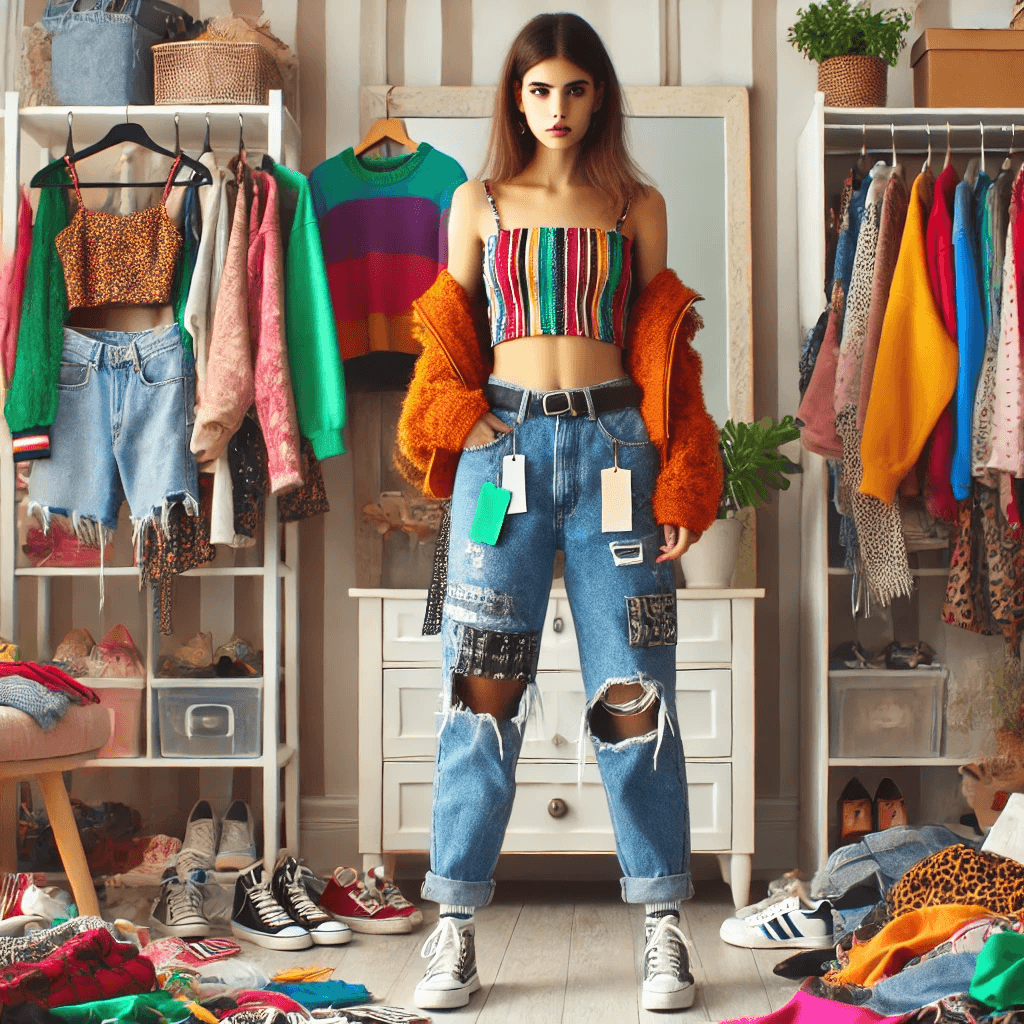
Fast Fashion Chaos: Trendy looks, overflowing closets.

Fast Fashion Chaos: Trendy looks, overflowing closets.

Timeless Fashion: Focused on simplicity and quality, timeless fashion style prioritizes designs that can be styled across seasons and occasions. For example, a neutral-toned cashmere sweater or an elegant pashmina scarf pairs effortlessly with various outfits, offering endless versatility.

Timeless Fashion Examples: Must-Have Timeless Pieces

Building a timeless wardrobe is simple when you focus on essential pieces. Here are some examples to build your timeless fashion style:

Neutral Cashmere Sweaters: Timeless and effortlessly elegant, neutral-toned cashmere sweaters are wardrobe essentials. Their soft, breathable texture makes them perfect for year-round wear, while the versatile shades, like beige, cream, gray, or camel, pair seamlessly with any outfit. Dress them up with tailored trousers for a refined look, or keep it casual with denim for everyday comfort. A well-made cashmere sweater not only elevates your style but also endures season after season.
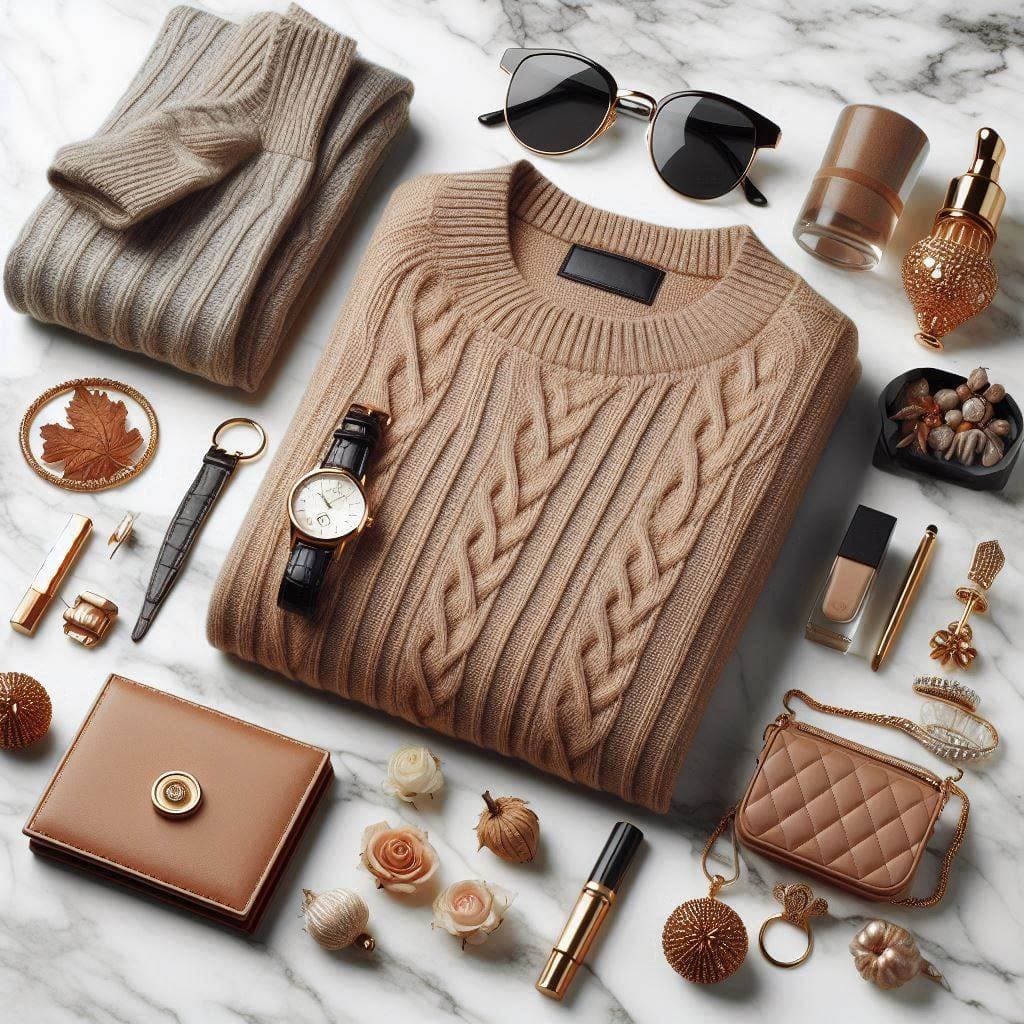
Timeless fashion cashmere sweater

Timeless fashion cashmere sweater

Blazers: Blazers are the epitome of timeless fashion, evolving from their origins in traditional menswear to becoming a universal style essential. Once reserved for formal and professional settings, blazers have transcended boundaries to suit every occasion, be it business meetings, evening gatherings, or casual outings.

Timeless fashion cashmere blaze

Timeless fashion cashmere blaze

Pashmina Scarves: Luxurious yet practical, pashmina scarves bring together warmth, elegance, and timeless appeal. Lightweight and incredibly soft, they drape beautifully, making them a versatile accessory for any season. Whether wrapped for cozy warmth in winter or styled loosely for a chic touch in spring, a pashmina scarf effortlessly elevates both casual and formal outfits. Available in a range of colors and patterns, it’s the perfect blend of function and fashion.
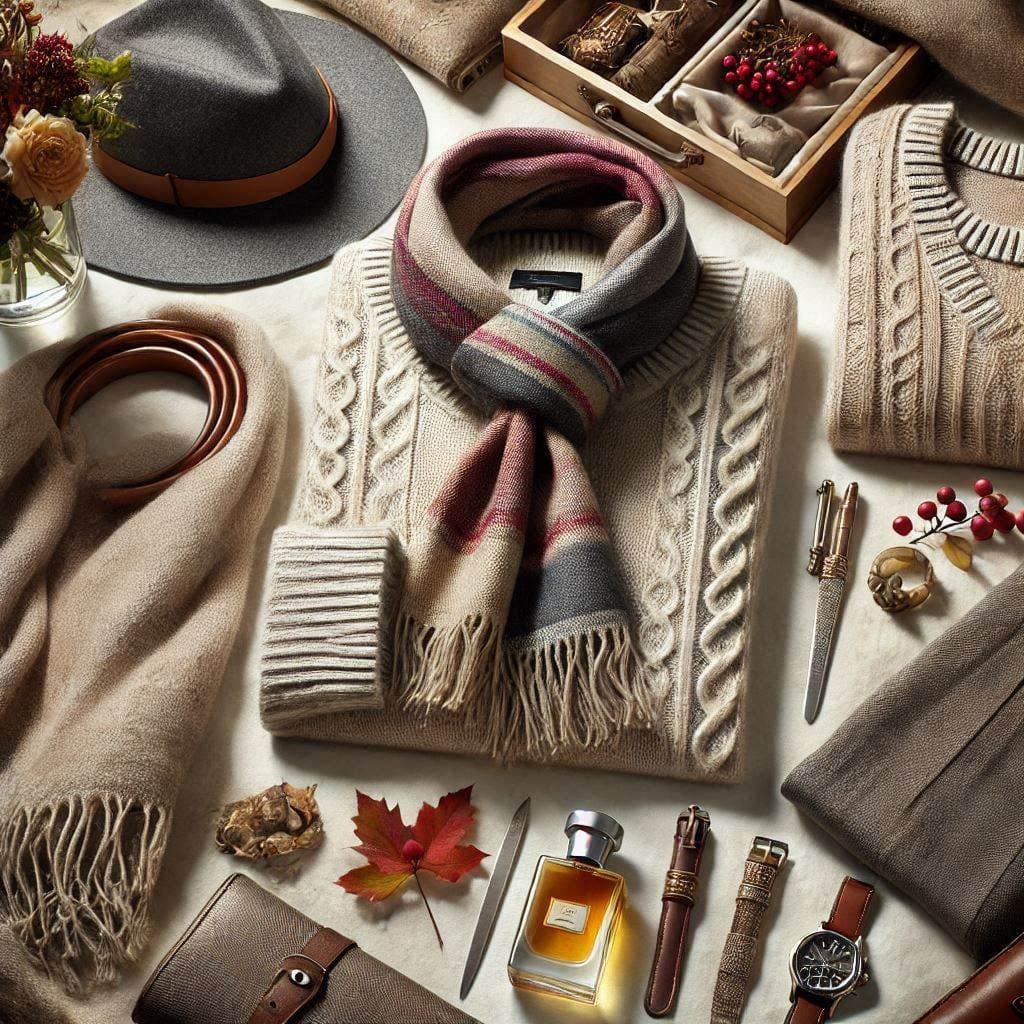
Cashmere Muffler 

Cashmere Muffler 

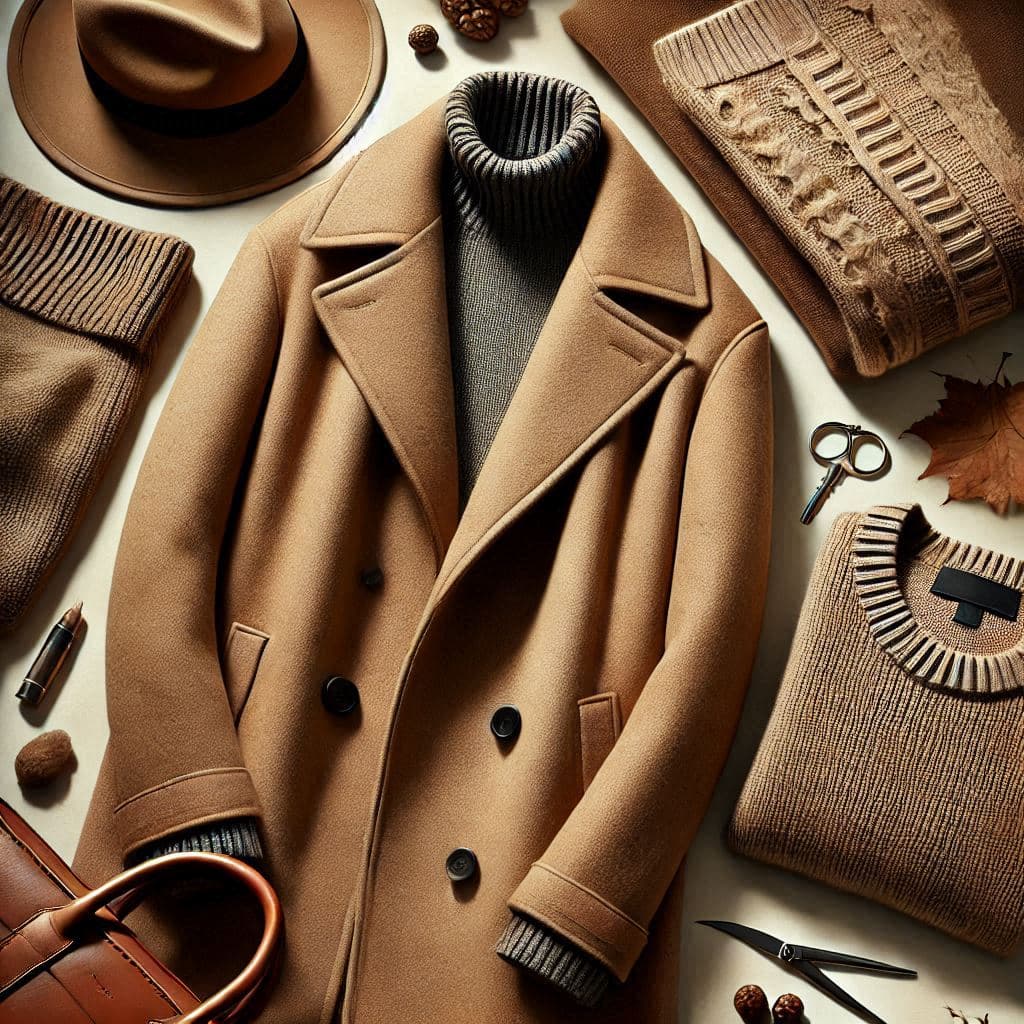
Functional Outerwear: Outerwear is more than just a layer of protection—it’s the finishing touch that completes any outfit. With clean lines and durable fabrics, a well-chosen coat blends seamlessly with everything from casual denim to tailored office wear, adding both function and flair. Its versatility lies in the way it adapts: lightweight styles for layering in spring and autumn, or heavier coats for winter warmth, all while maintaining a polished silhouette. A timeless outer not only keeps you comfortable year-round but also elevates everyday looks into effortlessly stylish ensembles.

Classic Old Fashion and Timeless Fashion

Timeless fashion often draws inspiration from classic old fashion, blending vintage charm with contemporary relevance. Pieces like tailored blazers or pashmina shawls carry a legacy of artistry while adapting seamlessly to modern styles.

At Yes Helping Hands, we honor this tradition through products like:

Lightweight Pashmina Scarves: Perfect for layering, the Pashmina Scarves add a touch of sophistication to any outfit.

Natural Wool Accessories: Crafted from Himalayan wool, our jackets, gloves, and caps combine rustic beauty with functionality.

Sweaters and Outerwear: Designed for durability and elegance, Yes Helping Hand cashmere sweaters and cardigans embody the essence of timeless fashion.

Learn how cashmere products are made at Yes Helping Hand.

Explore our timeless fashion cashmere collection:

Sustainability From Timeless Fashion

Timeless fashion isn’t just about looking good, it’s about doing good. Choosing quality pieces from brands like Yes Helping Hands contributes to a more sustainable future by:

Reducing Waste: High-quality, durable clothing minimizes the need for frequent replacements.

Supporting Artisans: Every pashmina and cashmere purchase directly supports skilled craftspeople, empowering marginalized communities of Nepal.

Using sustainable Materials: Products made from natural Himalayan wool, pashmina, and cashmere are not only luxurious but are also environmentally friendly and animal cruelty-free.

How to have a timeless fashion style?

Here’s how to incorporate timeless fashion into your daily life:

Start with Essentials: Invest in versatile fashion products like a natural fiber sweater or a lightweight pashmina scarf that are high quality and can be worn even after decades.

Mix and Match: Pair timeless staples with trendier items for a fresh yet grounded look. For eg, you can wear a cashmere sweater and layer it with a trench coat and formal pants for classic, timeless styling.

Focus on Quality: Choose products made with sustainable materials and superior craftsmanship. Quality fashion products last longer than fast fashion products, which can save time and money in the long run.

Support Ethical Brands: Opt in for ethical sustainable brands where every product is produced following the fair-trade principle and eco-friendly materials that reflect a commitment to sustainability and empowerment.

At Yes Helping Hands, we are proud to offer a collection that embodies the principles of timeless fashion. From luxurious sweaters to intricately crafted Pure Pashmina scarves and shawls and durable woolen accessories, each piece tells a story of quality, sustainability, and purpose.

By choosing timeless fashion, you’re not just upgrading your wardrobe; you’re contributing to a movement that values quality, ethics, artistry, and the environment. Explore our collection today and discover the beauty of timeless fashion style that truly lasts.

Was the Blog Helpful enough to know about the meaning, reasons, and guide to timeless fashion? If you found the blog helpful and would like to know more about the Sustainable Pashmina and cashmere Product, do visit our blog on origin, Properties, and price range of Cashmere and Pashmina.

Empowerment Through Learning: The Each One, Teach One Experience
Community
Dinesh Kumar Thapa2024-11-22

Are you traveling to Nepal and looking for a unique experience in Pokhara? There is an amazing opportunity waiting for you that goes beyond sightseeing. Yes Helping Hand (YHH) runs "Each One, Teach One" program, which provides tourists experience of making weaving, knitting and painting. "Each one Teach one program empowers single mothers and physically challenged individuals, including those who cannot speak or hear. Here, you will learn a skill and hear stories while making a positive impact.

Why This Program?

In Nepal, many single mothers and differently-abled individuals face challenges. Supporting their families is usually difficult. Even though they are have talents, they do not have chances to show their skills. Yes helping hand is home to these individuals. They have been trained to make chasmeer and woolen products. The "Each One, Teach One" program was created to support them by providing a platform where they can share their knowledge and earn simultaneously. This helps them to be independent and support their family.

You will learn directly from artisans who have turned their struggles into strengths. By joining, you support women's empowerment and help differently-abled individuals gain respect in society, and make sustainable earning.

Activities to Take Part in Pokhara – A Unique Learning Experience

The program offers hands-on learning. You will learn from skilled artisans who will guide you step by step. Here’s what you can do:

  • Handloom weaving: You will Learn to spin yarn, create a Tuki, and explore handloom weaving for Pashmina.
  • Craft your stool: Learn the basics of hand-knitting with guidance from experts. Craft your own small stool or shawl using Pashmina or Dhaka fabric.
  • Dhaka making: Set up a handloom and begin pattern weaving with Dhaka designs.
  • Advance Dhaka Making: Explore color mixing and pattern creation in Dhaka textiles.
  • Learn to Knit: Discover basic knitting techniques and crochet making.
  • Nepali Carpet Knotting: Understand the art of carpet knotting, an ancient craft passed down through generations.
  • Painting: Experiment with miniature canvas painting, using techniques taught by skilled artists.

The program is flexible. You can choose a 2 hour class or all 7-day immersive journey. Each day offers something new.

Empowerment and Impact

By joining, you help empower single mothers and differently-abled individuals. Your participation builds their confidence and helps them gain financial independence. It also supports their children. All fees collected go towards education, healthcare, and essential support for these families.

Additionally, this program is sustainable. All products are animal cruelty-free, promoting ethical practices that respect both nature and life. You will form a bond with artisans whose strength and resilience will inspire you.

Why Should You Join?

Joining the "Each One, Teach One" program means more than taking a workshop. You become part of a mission that supports those in need. You’ll leave with a handcrafted item, but more importantly, you’ll know you’ve made a difference.

The program offers:

  • Hands-on Learning: Create beautiful products using ancient techniques, guided by skilled artisans.
  • Collaborative Experience: Work directly with individuals who have overcome adversity. Their talent and resilience are truly inspiring.
  • Support a Greater Cause: Every fee goes towards funding education and essential support for children of single mothers and differently-abled artisans.

This journey isn’t just about learning a craft. It’s about embracing a culture, supporting a cause, and empowering others. When you travel to Nepal, don’t miss this chance. You’ll engage in an enriching experience that creates lasting change in the lives of others. Together, we can build a brighter, more inclusive future for these amazing artisans.

Step by Step Guide to Wash Pashmina At Home: Handwash and Washing Machine
Products
Dinesh Kumar Thapa2025-01-02

Guide on how to wash pashmina at home by hand and machine.

Taking care of pashmina and luxury cashmere clothing items at home can be confusing. What if the pashmina gets destroyed? What if the color of the pashmina fades away? Acknowledging these concerns, we have prepared a guide for washing pashmina at home by hand and machine. 

Before we dive deep into the washing process of the pashmina at home, we need to understand why is pashmina a delicate fiber and needs proper care and washing. 

Why is Pashmina a delicate fiber?

The exceptional thinness of pashmina measuring just 14-19 microns in diameter which is half the thickness of regular wool makes pashmina fiber one of the most delicate fiber.

Pashmina is a natural fiber made by weaving the delicate, softest wool of Himalayan goats. The wool from the neck and belly areas of the Himalayan goats is the softest fiber used to make pashmina at Yes Helping Hand. The extracted fiber is hand-woven by Nepali women and artisans of Nepal in traditional pashmina handloom yes helping hands to produce pashmina shawls, sweaters, and other luxury products. 

It is important to take care of pashmina carefully without using harsh chemicals during washing process.

If not handled with care, there is a high chance of pashmina fibers breaking and pashmina shawls and products being destroyed.

How to Wash Pashmina in the washing machine.

It is not recommended to wash your pashmina in the washing machine since the high spinning of the washing machine may result in the pashmina getting caught and destroyed. However, people can be busy and may need to wash their pashmina in the washing machine to save time and energy. 

Follow the guide below on how to wash pashmina in the washing machine to take care of your treasured pashmina items.

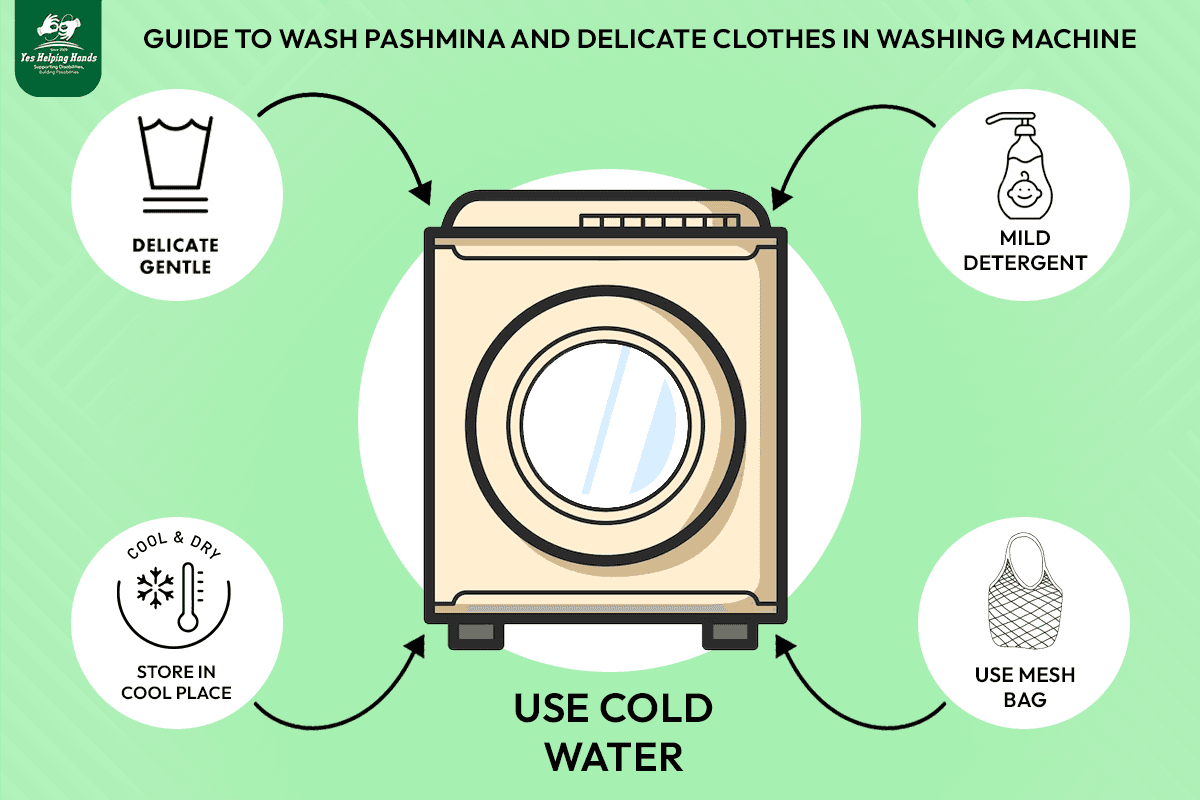
Mode Selection: While Washing Pashmina by washing machine the most important thing to take note of is the mode and cycle of the washing machine. Select "Delicate" "Baby" or "Wool" option in the washing machine so that the washing machine spins gently without destroying the pashmina fiber.

Detergent: Using harsh chemicals and detergents can really affect pashmina fiber. The strong detergent can cause the fiber and color of pashmina to erode. Use baby shampoo or mild detergent in the washing machine while washing pashmina in the washing machine to ensure the chemical won't affect the fiber and color of the pashmina. 

Cold or Luke warm Water: Using hot water to wash pashmina in the washing machine can damage its delicate fibers, causing them to shrink, lose their softness, and distort their shape. So, always use cold water or lukewarm water to wash pashmina clothing to prevent it from shrinking and losing its softness. 

Mesh Bags: While washing the pashmina in the washing machine there is a high risk of pashmina fibers getting caught and destroyed. It is recommended to use mesh bags while washing pashmina in the washing machine. Put your pashmina inside the mesh bag and put it inside the washing machine selecting delicate mode and low spin to ensure your pashmina remains in the best shape. 

Dry in a cool area: The sunlight can erode the color of the pashmina. After washing your pashmina, it is best to dry the pashmina in a cool and dry place without sunlight. 

Guide to Wash Pashmina By Washing Machine

Guide to Wash Pashmina By Washing Machine

How to wash pashmina by hand?

If you want to wash your pashmina by hand. Follow the instructions and guide below on how to wash pashmina by hand to ensure the pashmina is cleaned without damaging its delicate fiber. 

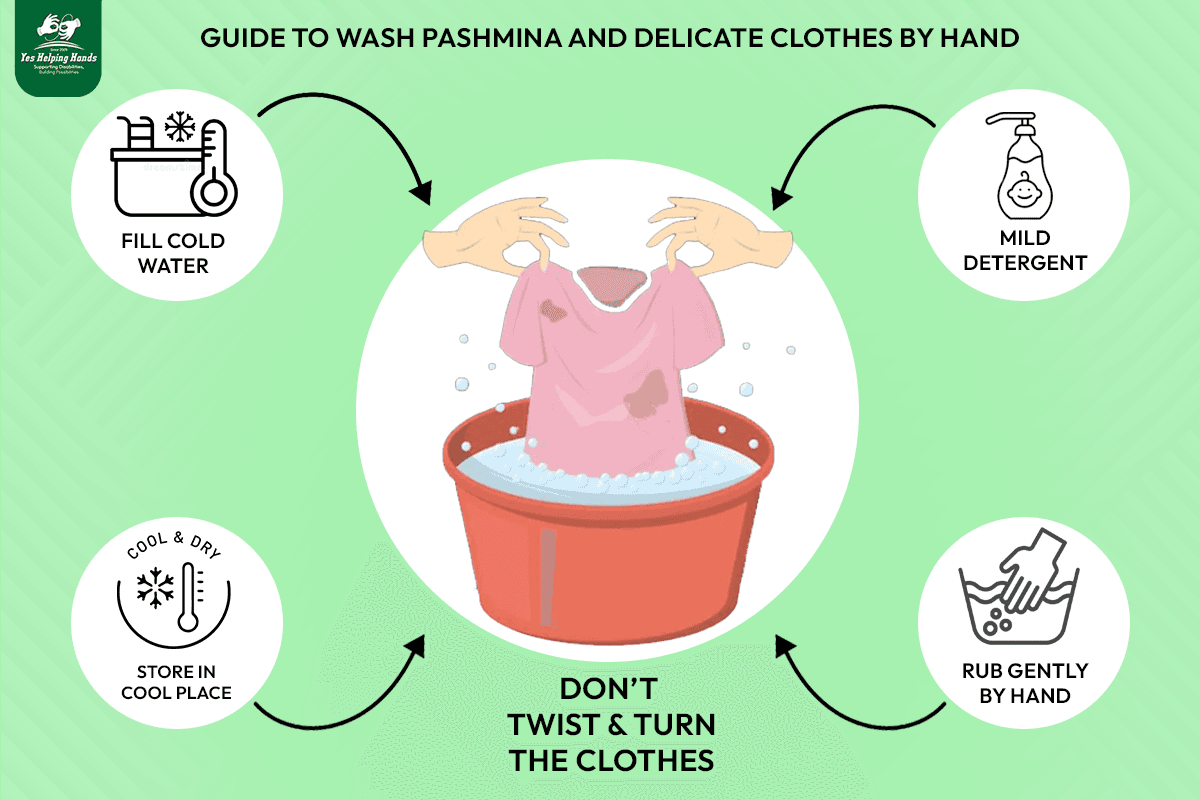
Fill the tub: Pashmina fibers should be washed in cold or lukewarm water. Fill the tub with cold or lukewarm water. Use cold water to prevent the pashmina fibers and clothing from shrinking and losing their softness. 

Add the Detergent: Add the baby shampoo or mild detergent in the tub and let it completely dissolve in the water. Prevent using Harsh detergents and chemicals to wash pashmina by hand, as it will erode the fiber and color of the pashmina. 

Soak the Pashmina: After adding the detergent and letting it dissolve in water, submerge the pashmina in the cold water and let it soak the water for 5-10 mins.

Gentle Handwash: After the pashmina soaks the water, gently rub and clean the pashmina with your hand. Avoid twisting and stretching the pashmina clothes as it may break the fiber of the pashmina. 

Rinsing the pashmina: After cleaning the pashmina rinse the pashmina with clean cold water to remove the detergents and chemicals in the pashmina clothing item. 

Dry in a cool area: Once you're done with washing and rinsing the pashmina let the pashmina dry in a cool area without sunlight. The sunrays may cause the colors of pashmina to fade so it is recommended to let the pashmina dry in the cool area. 

Guide to Wash Pashmina By Hand

Guide to Wash Pashmina By Hand

How often should we wash Pashmina?

Washing Pashmina regularly may weaken the delicate fiber of pashmina whereas not cleaning the pashmina may result in odor and stain marks in the pashmina. It is recommended to clean the pashmina once or twice a season to maintain the strength, warmth and softness of pashmina. Prevent ironing the pashmina after washing as it will cause the pashmina to shrink. 

If you want to know more about pashmina, the origination of pashmina and cashmere, properties of cashmere visit our blog below:

Unique Products from Nepal - Authentic Pashmina & Cashmere
Products
Yes Helping Hand2024-12-18

Nepal is famous for many unique Nepali products like the intricate artistry of Thangka paintings, the rich aroma of Ilam tea, and the warm glow of Himalayan salt lamps. 

While all these exceptional crafts, one product stands supreme as the undisputed symbol of Himalayan luxury wool: Cashmere and Pashmin.

For generations, the name 'Pashmina' has been synonymous with Nepali Cashmere and its elegance. These are not just clothes/apparel, but a legacy woven from the finest cashmere wool, with the traditional yarning practice known to human artistry, and a symbol of Himalayan purity in terms of A Grade cashmere.

What is Pashmina?

Pashmina is the finest grade of cashmere wool, not a separate fiber. The word comes from the Persian “Pashm” meaning “wool.” True Pashmina refers to ultra-fine cashmere fibers (12–17 microns) from the undercoat of Himalayan goats — mainly Chyangra goats in Nepal and Changthangi goats in Kashmir and Ladakh.

What is Cashmere?

Cashmere is a high-quality natural fiber obtained from the soft undercoat of cashmere goats. It is known for its softness, warmth, and lightweight feel, with fibers typically 18–19 microns in diameter, making it ideal for premium sweaters, scarves, and other luxury garments.

Cashmere vs. Pashmina: Complete Comparison

AspectRegular CashmereAuthentic Pashmina
Fiber Diameter18-19 microns12-17 microns (often 12-15)
Source AnimalVarious cashmere goat breedsHimalayan Chyangra/Changthangi goats only
Geographic OriginChina, Mongolia, Iran, AfghanistanNepal, Kashmir, Ladakh (Himalayas)
Altitude of OriginSea level to 3,000m3,000m to 5,000m+ (15,000+ feet)
Annual Production per Goat200-300 grams80-150 grams
Softness LevelSoftUltra-soft, almost silky
Weight-to-Warmth RatioGoodExceptional
Fiber Quality GradeGrade B to AGrade A+ (premium only)
Processing MethodOften machine-processedTraditionally hand-processed
Real Price Range$50-200 for scarves$150-800+ for authentic pieces
Durability5-10 years with care20+ years, generational, with great care
Pilling TendencyModerate pillingMinimal pilling (high-quality)
Market AvailabilityWidely availableLimited, often seasonal
AuthenticationBasic fiber content labelsSource and trademarks 
Cultural SignificanceCommercial luxury item800+ years of cultural heritage
Ethical CollectionVaries by producerNaturally shed, no animal harm
Weaving TraditionMachine or handExclusively hand-woven on traditional looms

Key Point to Understand: All Pashmina is cashmere, but not all cashmere qualifies as Pashmina. Pashmina represents the finest grade of cashmere; not all cashmere can be called Pashmina. The craftsmanship, fiber quality, and heritage that set them apart in Cashmere vs Pashmina: The Real Comparison.  

What makes Nepali Cashmere unique and special?

Nepal is known worldwide for its pure and eco-friendly cashmere. What makes it special isn’t just its soft, smooth feel; it comes from the perfect mix of nature and tradition.

High in the Himalayan mountains, goats grow a very fine undercoat to stay warm in freezing temperatures. This makes it the softest and warmest natural fiber from Nepal.

For generations, Nepali artisans have hand-spun, dyed, and woven this fiber with care. Each piece of Nepali cashmere offers not only warmth and comfort but also a connection to Himalayan heritage and responsible craftsmanship.

  • Home to the Chyangra goats, found at elevations between 3,000–5,000 meters in the Himalayas.
  • Goats graze on wild herbs and native vegetation, resulting in naturally rich, eco-friendly fibers.
  • Traditional cleaning and combing processes use minimal or no harsh chemicals, preserving the fiber’s softness and strength.
  • Cashmere weaving in Nepal is a generational craft practiced for centuries.

Unique Cashmere Products from Nepal

Nepalese cashmere isn’t limited to scarves; the fibers are transformed into a wide variety of unique, hand-crafted products, each blending tradition and modern style:

  • Shawls & Stoles – timeless elegance with intricate handwoven patterns.
  • Scarves – ultra-soft, lightweight, and perfect for all seasons.
  • Sweaters & Cardigans – warm, cozy, and durable, crafted with care.
  • Blankets & Throws – luxurious warmth for home or travel.
  • Jackets & Outerwear – combining heritage weaving with contemporary fashion.
  • Accessories – hats, gloves, and other small items made with the same care and quality.

Explore our Cashmere Collection from Nepal:

Why Our Cashmere is Unique?

At Yes Helping Hand, we don’t just sell cashmere; we create stories, heritage, and sustainable luxury in every piece. Here’s what makes our cashmere truly special:

  • Handcrafted Excellence: Every product is hand-spun, handwoven, and hand-finished by skilled Nepali artisans, preserving centuries-old Himalayan weaving traditions.
  • Ethical and Sustainable: We use only naturally shed fibers, ensuring no harm to the goats, and promote eco-friendly production that supports sustainable livelihoods.
  • Empowering Communities: Our programs train single mothers and differently-abled artisans, helping them gain independence and build a dignified career.
  • Premium Quality: We focus on Grade A+ fibers, ensuring ultra-soft, lightweight, and long-lasting cashmere.
  • Unique Designs: Each piece is carefully crafted to combine traditional artistry with contemporary style, making our products one-of-a-kind in look, feel, and story.
  • Cultural Heritage: By choosing Yes Helping Hand, you’re supporting Nepalese cultural preservation, sustaining an 800+ year-old craft, and connecting with authentic Himalayan luxury.

The Social Impact of Your Cashmere & Pashmina Purchase

Your Purchase = A Life Transformed

When you choose Pashmina & Cashmere from Yes Helping Hand, you're not just buying luxury; you're directly changing lives in Nepal from remote Himalayan villages to single mothers, and specially-abled artisans.

Empowering Single Mothers & Differently-Abled Artisans

Yes, Helping Hand employs 40+ differently-abled artisans who society often overlooks. Single mothers from various parts of Nepal joined our 6-month training program, learned to handle their lives without charity, but with opportunity.

The result? Some of our finest pieces come from artisans whom others deemed "unemployable."

Learn more about makers from their story.

Not only can we guarantee community Inclusions, but we can also proudly say we are also mending and knitting our way to a sustainable fashion brand.

When you choose Yes Helping Hand, you don't just buy Pashmina, you invest in human dignity, cultural preservation, and sustainable luxury. Your purchase creates ripple effects that transform communities, one thread at a time.

Origin and Properties of Cashmere - A Luxurious Fiber (Wool)
Products
Yes Helping Hand2024-12-20

Already know the basics about Cashmere Wool? Invest better in Cashmere with our buying guide to make a better investment.

What is Cashmere Wool?

Cashmere wool is a natural fiber obtained from the soft undercoat of Himalayan goats, which are specifically called "chyangra" in Nepal. This high-quality fiber is harvested from the neck and belly areas of these mountain goats, making it one of the most desired materials for luxury clothing and accessories around the world.

What makes Cashmere Special?

Unlike regular sheep wool, cashmere fiber measures only 13-19 microns in diameter - nearly half the thickness of traditional wool at 30 microns. This ultra-fine structure gives cashmere its signature softness, warmth, and lightweight properties that have made it a symbol of luxury for centuries.


Quick Cashmere vs Regular Wool Comparison:

PropertyCashmereRegular Sheep Wool
Fiber Diameter13-19 microns30 microns
Warmth factor8x warmerStandard
WeightUltra-lightweightHeavy
Annual Yield Per Animal200-250 grams2-8 kg
Source Altitude3,000+ metersSea level to mountains

In this blog, we will be discussing the following cashmere wool-related questions :

1. Origin of Cashmere Wool
2. Properties of Cashmere Wool
3. Cashmere Sourcing

Origin of cashmere wool:

Beginnings in High Altitudes - Starting of Cashmere

The origin of cashmere wool dates back thousands of years to the harsh, cold regions of the Himalayas.

Where does cashmere wool come from?

It originates from specialized goats living in extreme mountain environments across Nepal, Mongolia, Kashmir, and parts of China.

Cashmere is obtained from Chyangra goats (Himalayan goats) that have evolved to survive in brutal mountain conditions. The cold climate forced these animals to develop an incredibly fine, insulating undercoat - which we now call cashmere.

Nepal - Home to the World's Finest Cashmere

Nepal's cashmere industry represents a remarkable story of quality and tradition. With 131,000-131,695 Chyangra goats across 15 high-altitude districts, Nepal produces what 2022 research confirmed as "among the world's finest cashmere goats." These goats must be raised above 3,000 meters (approximately 10,000 feet), where extreme conditions create superior fiber quality, averaging 15.36 microns in diameter and 45.97mm in length, which also varies the price of cashmere.

Organizations like Yes Helping Hand demonstrate how ethical cashmere production can empower marginalized communities while creating world-class products. Their work with specially-abled individuals and single mothers shows how the cashmere industry can drive positive social change while maintaining Nepal's reputation for premium quality.

Historical Journey of Current Global Luxury Fiber

Cashmere history shows a fascinating evolution from a survival necessity to a luxury symbol. Commercial cashmere production began in the 13th century with cashmere shawls as the first known products in global fashion. The Mughal Empire, particularly Emperor Akbar, played a crucial role in expanding cashmere's popularity.

European recognition exploded in the 18th century when traders discovered cashmere's exceptional warmth properties. Napoleon Bonaparte famously gifted cashmere shawls to Josephine, introducing the French aristocracy to this luxury fiber.

Today's global cashmere market reached $3.48-5.5 billion in 2024, with projections of $4.86-9.1 billion by 2032.

Properties of Cashmere Wool: What Makes It Extraordinary

Let’s learn about each of the unique properties of cashmere wool and fibers.

⇒ Unmatched Softness:

Cashmere fiber properties include incredible softness due to its fine diameter. At 14-19 microns, cashmere feels dramatically softer than regular wool's 30-micron thickness. This cashmere fiber characteristic makes it gentle against sensitive skin.

⇒ Superior Warmth and Insulation:

Cashmere wool properties include exceptional thermal performance - 8 times warmer than regular sheep wool while remaining lightweight. Insulating properties work through fine fibers trapping more air, with thermal ranking:

Camel wool > Sheep wool > Cashmere > Polyester.

⇒ Lightweight & Luxury:

What makes cashmere special is its ability to provide maximum warmth with minimum weight. A cashmere sweater offers superior insulation without the bulk of traditional wool garments.

⇒ Breathability:

Cashmere fabric properties include excellent air circulation, preventing overheating while maintaining comfortable body temperature in various weather conditions.

⇒ Moisture Management:

Properties of cashmere include natural moisture absorption and wicking capabilities, keeping skin dry and comfortable during wear.

⇒ Elasticity and Shape Retention:

Cashmere characteristics feature 25.63-31.42% elastic recovery, allowing garments to maintain their shape and drape beautifully over time.

⇒ Exceptional Durability:

When properly cared for, cashmere fiber properties include remarkable longevity. Quality cashmere products can last decades while maintaining their softness and appearance.

Nepal's Cashmere Excellence

Recent scientific studies on Nepal's cashmere reveal impressive specifications from a 2022 Mustang District Study of 34 Chyangra goats:

→ Average fiber diameter: 14.36±0.19 microns
→ Average fiber length: 45.97±0.14 mm
→ Quality assessment: Among the world's finest cashmere goats

Nepal maintains strict quality standards with a maximum 17 micron diameter for the Chyangra Pashmina trademark, minimum 97% cashmere fiber content, and trademark protection registered in 47 countries, including the EU, USA, Canada, and Japan.

Cashmere Sourcing 

How is Cashmere Made?

How is cashmere made? The process involves hand-combing, sorting, and cleaning of the collected fibers, which takes approximately 15 days to produce one shawl. Fiber from 3 goats is needed for one complete pashmina shawl.

Complete Guide to Nature's Most Luxurious Fiber - Cashmere Wool

Cashmere fabric is widely used in luxury fashion, including cashmere cardigans and sweaters, pashmina shawls and scarves, as well as cashmere blankets. Beyond clothing, cashmere uses extend to premium bedding, decorative throws, and luxury cushions.

Check our Collection of Cashmere clothing:

Cashmere Quality - What to Look For?

When evaluating pure cashmere wool, consider fiber diameter of 13.5-17 microns for premium quality, minimum 40mm length for durability, and 100% cashmere labels from high-altitude sources. Cashmere fabric characteristics of premium products include smooth, soft hand feel, natural elasticity, even texture, and appropriate weight for warmth.

Ethical Production & Sustainable Cashmere

Sustainable cashmere supports fair trade practice, ensuring goat herders receive fair compensation, animal welfare through traditional hand-combing methods, environmental protection via carbon-neutral production, and community development in remote mountain regions.

Nepal's cashmere industry employs over 25,000 people directly, with a current export value of $27 million annually and targets of $75 million by 2026, making it the country's third-largest export industry after tourism and carpets.

Cashmere vs Other Fibers: Making the Right Choice

Compared to regular wool, cashmere provides significantly superior softness due to finer fibers, 8x more warmth per weight, and commands premium pricing, while both offer durability when properly cared for. For Comparison with other fibers: 

Cashmere vs Merino wool

Cashmere vs Synthetic Fibers

Cashmere vs Sheep wool

Cashmere vs Alpaca wool

Which is warmer: cashmere or pashmina?

Pashmina is a type of cashmere from specific Himalayan regions. The terms are often used interchangeably, though pashmina typically refers to the finest grade of cashmere products.

Caring for Your Cashmere: Quick Do's and Don'ts:

✅ DO's ❌ DON'Ts
Hand wash in cool water with mild detergentDon't use bleach or harsh chemicals
Lay flat to dry on a clean towelAvoid direct heat when drying
Fold garments when storingDon't hang cashmere garments
Use cedar blocks for natural moth protectionNever wring or twist wet cashmere
Professional clean for valuable piecesNever machine dry on high heat

Why Cashmere Remains Unmatched:

Cashmere wool represents the perfect combination of luxury, functionality, and heritage. From its origins in the harsh Himalayan mountains to modern sustainable fashion, cashmere continues to set the standard for premium natural fibers.

What makes cashmere special isn't just its incredible softness or warmth - it's the centuries of tradition, the skilled artisans who create each piece, and the sustainable practices that ensure this luxury remains available for future generations.

Even if you're choosing your first cashmere piece or adding to an existing collection, understanding these cashmere properties and origins helps you appreciate the remarkable journey from mountain goat to luxury garment.

Ready to experience authentic Himalayan cashmere?

Explore our collection of ethically sourced, handcrafted cashmere products and join thousands who've discovered why Nepal produces the world's finest cashmere wool.

Cashmere Price Range: Why Costs Vary & How to Choose
Products
Yes Helping Hand2024-10-22

Walk into any department store, and you'll find cashmere sweaters priced at $80. Browse luxury boutiques, and similar-looking sweaters cost $800. Online, you'll see cashmere scarves ranging from $40 to $400.

So what's the difference? Is expensive cashmere actually worth it, or are you just paying for a brand name?

The truth is: cashmere quality varies dramatically, and price often (but not always) reflects that quality. 

Cashmere is the pinnacle of luxury and comfort, but its price tag can be confusing. Why does a cashmere sweater cost $60 at one store and $400 at another? 

In this guide, we break down exactly what determines cashmere pricing, so you can make informed purchases and get real value for your money.

The answer lies in understanding the origin of cashmere, its quality, sourcing, and the craftsmanship that goes into it. Knowing these differences can save you hundreds while ensuring you get the best value for your investment. 

 Quick Cashmere Price Comparison                                                               

 What Drives Cashmere Prices?

Fiber Diameter & Micron Count - The Foundation of Quality

The fineness of cashmere fibers directly impacts both price and performance. Here's how micron count translates to your wallet:

GradeMicron RangeFeel & PerformancePrice Impact
Grade AUnder 15 µmUltra-soft, silk-like texturePremium(+100 - 150%)
Grade B15.6 - 19.0 µmExcellent softness, durablePremium & Affordable
Grade C19.1 - 30.0 µmSoft and durable than fast fashionAffordable, but Pure Cashmere

Yes Helping Hand Advantage: We source 100% pure cashmere in the Grade A, B, and C range, offering exceptional quality at accessible prices through direct partnerships and social impact sourcing. So, everyone can afford and feel the softness of 100% pure cashmere clothing.

Source & Altitude: Geography Matters

Why Himalayan cashmere costs more than Mongolian cashmere:

  • Himalayan goats (>3,000m elevation):
  • Mongolian goats (~2,000m elevation):

The elevation effect: Every 1,000m increase in altitude reduces fiber diameter by ~0.7 µm, directly boosting market price.

The Scarcity Factor: Annual Yield per Goat

Here's why cashmere will always command premium pricing:

MaterialAnnual YieldSweaters per AnimalRelative Scarcity
Cashmere200-250g1 sweater = 4-6 goatsUltra-rare
Sheep Wool2-8kg1 sweater = 1 sheepAbundant

Machine-made vs Hand-made production difference:

The choice between machine and handmade cashmere production creates a fundamental difference in pricing, garment quality, and longevity.

The processing method dramatically affects both price and longevity:

Hand-Combing Benefits:

  • Only 2-4% fiber breakage (vs. 8-12% machine processing)
  • Preserves natural fiber strength and softness
  • 15-20 days artisanal care per garment
  • Costs 40-60% more than machine processing

Machine Processing Trade-offs:

  • Faster production (1-2 days vs. 15-20 days)
  • Lower initial cost
  • Higher fiber damage reduces durability
  • Compromised texture and feel

The undercoat of cashmere goats yields a fine, silky wool known as cashmere. It takes a lot of work to gather the fibres from the goats since they need to be meticulously combed. This adds to the fibres' uniqueness and helps explain the expensive price.

Check out our cashmere collection:

Additional Factors that affect Cashmere Price

1. Ply/Gauge Variations

Ply TypeConstructionPrice ImpactDurabilityBest For
Single-PlyOne yarn strandBudget-friendly (-20-30%)LowerLightweight scarves
2-PlyTwo strands twistedStandard pricingHighMost sweaters/cardigans
3-Ply+Multiple strandsPremium (+25-40%)HighestCoats, heavy sweaters

Key Points: 

Single-ply feels lighter but less durable 

→ 2-ply offers the best balance of warmth and longevity
→ 3-ply+ creates heavier, more expensive garments
→ Higher ply count = more cashmere fiber used = higher cost

2. Yarn Preparation Methods

MethodProcessFiber DamagePrice ImpactFinal Quality
CardedMechanical brushingHigher (5-8%)Lower cost (-15-25%)Good softness
CombedHand/precision combingMinimal (1-3%)Higher cost (+15-25%)Superior softness

Processing Details: 

→ Carded cashmere: Faster, machine-driven process with some fiber breakage
→ Combed cashmere: Slower, careful alignment preserves fiber integrity
→ Combed advantage: Longer-lasting softness, reduced pilling
→ Price justification: Extra labor time and reduced yield drive up costs

3. Weave Density Variations

Density LevelGauge CountCashmere UsedPrice RangeCharacteristics
Loose Knit3-5 gaugeLess fiberBudget ($40-80)Lightweight, drapey
Medium Knit7-12 gaugeStandard amountMid-range ($80-150)Balanced warmth/weight
Tight Knit14+ gaugeMore fiberPremium ($150-300+)Dense, very warm

Density Impact:

→ Tighter weaves require 20-40% more cashmere fiber
→ Dense construction = better shape retention
→ Loose knits = more affordable but less durable
→ Gauge count directly correlates with final garment cost

4. Brand Overhead & Retail Markup

Cost ComponentPercentage of Final PriceExample on $200 Sweater
Raw Cashmere25-35%$50-70
Manufacturing15-25%$30-50
Brand Operations15-25%$30-50
Retail Store Markup50-100%$100-200

5. Seasonal & Fashion Factors

FactorPrice VariationPeak SeasonsImpact Duration
Fashion trends±20-30%Fall/Winter launch1-2 seasons
Seasonal demand±15-25%Oct-Feb4-5 months
Color popularity±10-15%Varies by trend6-12 months
Style complexity±25-50%Year-roundPermanent

Seasonal Pricing Patterns:

  • Fall/Winter: Peak pricing due to high demand
  • Spring/Summer: 20-40% discounts on previous season stock
  • Trending colors: Command 10-15% premium during peak popularity
  • Classic neutrals: Maintain steady pricing year-round
  • Complex designs: Cable knits, patterns add 25-50% to base price
  • Limited editions: 30-100% premium for exclusivity

Identifying Pure Cashmere

Our products are made from pure cashmere.

We are transparent, but most luxury fashion brands aren't. So, here's your quality checklist:

  • Social impact: Look for brands supporting inclusive employment, we do.
  • Feel: Should be soft and warm, not slick or itchy
  • Label: Must say "100% Cashmere" - ours does
  • Micron count: 15.6-19 µm for 100% pure cashmere quality 
  • Fiber length: ≥36mm for durability 
  • Hand-feel test: Should feel noticeably softer than synthetic 
  • Pilling behavior: Initial pilling stops after 3-7 wears 
  • Color consistency: Even dye distribution, no blotchiness 
  • Brand transparency: Look for brands that share their story and mission; we do.
  • Social impact: Look for brands supporting inclusive employment, we do.

Our Cashmere Ponchos are crafted with the same attention to quality, transparency, and ethical practices highlighted in our checklist.

Answers for FAQs on Cashmere Pricing:

Is 100% cashmere always worth the price?

Yes, when you buy quality cashmere from ethical sources. Look for Grade A or B cashmere (15–19 microns) from reputable brands. Avoid very cheap cashmere, as it’s likely low-quality or blended. Yes Helping Hand’s 100% pure cashmere offers genuine luxury and long-lasting comfort.

Why are some cashmere blankets more expensive than sweaters?

Blankets require 25-50% more cashmere fiber. A sweater uses fiber from 3-4 goats, while a blanket needs 4-6 goats' worth. Plus, Cashmere blankets use heavier ply construction for durability and have a larger surface area, driving up material costs.

How much should I budget for quality cashmere?

Quick Budget guide:

  • Scarves: $50-80
  • Sweaters: $80-150
  • Blankets: $120-200
  • Premium pieces: $150-250

For ethical options with social impact, expect to pay 20-30% less than luxury brands while getting the same quality.

Check out the cashmere collection at Yes Helping Hand.

Why is your cashmere more affordable?

Yes Helping Hands eliminates middleman markups and luxury brand overhead. Direct sourcing from Nepal saves 30-40%, and we use Grade B cashmere (still premium quality) instead of Grade A. Yes Helping Hands' profits support our mission, not expensive marketing campaigns.

How do I care for cashmere to make it last?

Follow these 4 steps:

  1. Hand wash in cold water with wool detergent
  2. Never wring or twist - gently squeeze out water
  3. Lay flat on towel to dry, reshape while damp
  4. Store folded in breathable containers, never hanging

Proper care can extend the life of cashmere to 10+ years. Follow our cashmere care guide for extra tips.

How can I tell if cashmere is genuine?

Check these 5 indicators:

  1. Label must say "100% Cashmere" (not "cashmere blend")
  2. Feel test: Should be soft but not slippery like synthetic
  3. Price check: Real cashmere under $40 is suspicious
  4. Burn test: Real cashmere smells like burning hair, not plastic
  5. Brand transparency: Legitimate brands share sourcing details.

Learn how to verify authenticity before buying by checking our guide to identifying real cashmere.

What's the difference between Grade A, B, and C cashmere?

Grade breakdown:

  • Grade A (under 15 microns): Ultra-premium, silky feel, most expensive
  • Grade B (15-19 microns): Excellent quality, best value, Yes Helping Hands' standard
  • Grade C (19+ microns): Good quality, budget-friendly, still genuine cashmere

Grade B offers 90% of Grade A's luxury at 60% of the price.

Is cashmere warmer than wool?

Yes, cashmere is 8x warmer than sheep wool due to finer fibers that trap more air. A lightweight cashmere sweater provides the same warmth as a heavy wool sweater, making it ideal for layering and travel.

Why does cashmere pill initially?

New cashmere naturally pills for the first 3-7 wears as loose fibers work their way out. This is normal and actually indicates quality - synthetic materials don't pill the same way. After initial pilling stops, quality cashmere becomes smoother and softer.

Yes Helping Hand: Luxury with a Conscience

Experience the softness of 100% Pure Himalayan Cashmere from Nepal at a fraction of the cost of major brands. You no longer have to choose between luxury quality, an accessible price, and your principles. With our collection of cashmere sweater collections,  you get all three.

Our Social Impact Advantage:Why our ethical cashmere delivers exceptional value:

  • The Quality: 100% Pure Cashmere from modern, efficient production.
  • The Value: Direct sourcing eliminates middleman markups, saving you 20-35% and delivering budget-friendly prices.
  • The Principle: Every purchase supports fair employment and creates opportunities for skilled artisans with disabilities and single mothers, empowering them to build livelihoods and achieve independence.

Our Unique Position: Direct sourcing + social impact = genuine 100% cashmere at affordable prices.

You aren't just buying a sweater; you are becoming part of the Yes Helping Hand story, and you will help sustain the livelihood of our makers.

Still Confused? Check out our FAQs for Cashmere Pricing Difference:

  • Is 100% cashmere always worth the price? Yes. Worth it only when quality and sourcing are legitimate. Grade A or B cashmere (15–19 microns) from reputable, ethical producers delivers durability and comfort. Cheap “100% cashmere” usually signals low-grade fiber or deception.
  • Why are some cashmere blankets more expensive than sweaters Blankets consume 25–50% more fiber. A sweater uses fleece from 3–4 goats; a blanket requires 4–6. Heavier ply construction and higher surface area increase material and production cost.
  • How much should I budget for quality cashmere? The exact budgets depend on various factors, but ethical, direct-source brands typically cost 20–30% less than luxury labels for equivalent quality.
  • Why is your cashmere more affordable? Costs are reduced by eliminating middlemen and luxury-brand overhead. Direct sourcing from Nepal cuts 30–40%. Grade B cashmere is used instead of Grade A. Profits fund mission-driven work, not marketing.
  • How do I care for cashmere to make it last? Hand wash cold with wool detergent. Do not wring or twist. Gently press out water. Dry flat on a towel and reshape while damp. Store folded in breathable containers. Proper care yields 10+ years of use.
  • How can I tell if cashmere is genuine? Label must state “100% Cashmere.” Texture should be soft but not slick. Prices under $40 are suspect. Burn test smells like hair, not plastic. Legitimate brands disclose sourcing.
  • What’s the difference between Grade A, B, and C cashmere? Grade A: under 15 microns, ultra-premium, highest cost. Grade B: 15–19 microns, excellent quality, best value. Grade C: 19+ microns, coarser, budget tier. Grade B delivers most of Grade A’s feel at significantly lower cost.
  • Is cashmere warmer than wool? Yes. Approximately eight times warmer than sheep wool due to finer fibers that trap more air. Comparable warmth with less bulk.
  • Why does cashmere pill initially? Loose fibers shed during the first 3–7 wears. This is normal and indicates natural fiber. After removal, pilling stops, and the fabric smooths out.
Secure Checkout

Secure Checkout

Encrypted with SSL certificate

Free Exchange

Free Exchange

Hassle-free process

Eco-Friendly

Eco-Friendly

Sustainable practices

Easy Payment

Easy Payment

Convenient and flexible

We accept

paypal
visa
mastercard
alipay
union pay
stripe

Secured Payment

secured by visa
ssl-encryption